
Made available by Bob Emery of the Submariners Association of Canada West
The snorkel electrical system provides the electrical controls which
operate the snorkel system's hydraulic and pneumatic control devices,
indicating lights and horns. Power for this system is normally supplied
from the 120 volt, 60 cycle single phase, a c bus on the IC switchboard.
The snorkel system is so designed that the loss of all a-c power or
power to the diesel engine safety circuit will cause a shutdown of
snorkelling.
This circuit indicates the position of the snorkel mast in any of three positions: MAST UP, MAST IN LOWER OPERATING POSITION, and MAST DOWN. Three lights on the control room snorkel panel indicate the appropriate position.
This circuit provides indication of the position of the head valve, either OPEN or SHUT.
This circuit controls the operation of the head valve so that water will not be taken in through the induction mast while snorkelling. Three electrodes located in the head valve housing normally control the head valve. The head valve may also be opened or shut manually by the head valve control switch located in the control room. The three electrodes are mounted at 120 degree intervals around the periphery of the head valve housing, slightly below the valve seat. The electrodes are designated PORT, STARBOARD and AFT. The electrodes are connected into the control circuit by switches located on the control room snorkel panel. The switches are designated: AFT, PORT, and STARBOARD.
When the head valve operating circuit is energized, a wave washing over one of the electrodes will cause it to be shorted out. This action will de energize the head valve control solenoid and the head valve will be forced shut by ships service air pressure and spring pressure. As soon as the electrode short is removed, the head valve control solenoid is energized and ships service air forces the head valve open.
Located on the control room snorkel panel is a test switch to simulate shorting out an electrode. Also located in the control room is a diving officer's switch with which the diving officer can cause the head valve to open or shut at any time.
To provide indication of a flooded snorkel induction mast, there is an electrode located in the snorkel air induction pipe between the water separator and the snorkel Induction valve. If water collects in this section of the induction piping, the electrode is shorted and a flasher unit warns personnel in the control room. There is a test switch that is used to test the circuit by hand for proper operation. The switch is spring loaded so it is normally in the open position.
The snorkel order circuit provides a means of transmitting signals from the control room to the engine rooms and the manoeuvring room. The snorkel order switch is located on the snorkel control panel in the control room. Positions on the switch are labelled SNORKEL, SECURE SNORKEL and OFF.
When the order switch is turned to SNORKEL, green indicating lights are lighted on all four control panels (control room, forward engine room, after engine room, and manoeuvring room).
When the order switch is turned to SECURE SNORKEL, red indicating lights are lighted on all four control panels and horns sound in the engine rooms and the manoeuvring room.
When the switch is turned to OFF., the system is completely de energised and no indication shows on any of the panels.
The main snorkel exhaust valve, referred to as Able Valve, can be shut, but NOT opened from the control room at any time. The control valve is of the spool type, four way and manually operated. The two operating positions are: CONTROL IN ENGINE ROOM and EMERGENCY SHUT.
For normal snorkel operations, the control room Able Valve control valve is placed in the CONTROL IN ENGINE ROOM position.
The Able Valve remote control valve is located in an engine room and is solenoid operated during normal operations, but there is a provision for manually overriding the solenoid.
When the control room control valve is placed in the EMERGENCY SHUT position, the hydraulic lines from the Able Valve remote control valve are locked and the control room control valve sends shutting oil to the Able Valve power piston.
The Able Valve remote control valve has three positions: OPEN, NEUTRAL, and SHUT. The remote control valve is kept in the NEUTRAL position prior to snorkelling by a removable pin. When the pin is removed, Able Valve remote control valve solenoid when energised can move the control valve to the OPEN position against spring pressure. With the pin out and the solenoid de energized, the control (spool) valve will be moved to the SHUT position by spring pressure.
At the commencement of a snorkel start, the snorkel engine discharges exhaust gas into the snorkel exhaust line. Able Valve is shut, therefore, exhaust back pressure will build up in the exhaust line. A bellows operated back pressure switch, located in the snorkel exhaust pipe above the crew's mess, expands as exhaust pressure builds up. When the back pressure reaches 17 psi, the back pressure switch shuts and energizes Able Valve remote control valve solenoid. The energized solenoid moves Able Valve control valve to the OPEN position. This sequence of events allows pressure from the hydraulic system to open Able Valve.
As the exhaust mast blows dry and back pressure drops to about 3-6 psi, the back-pressure bypass switch is shut. The back pressure by pass switch keeps Able Valve remote control valve and the engine shutdown solenoids energized when the back pressure switch opens.
If at any time the circuit is interrupted by either HIGH BACK PRESSURE, LOW RPM, HIGH VACUUM, or LOSS OF AC POWER, Able Valve remote control valve is de-energized and spring pressure forces the remote control valve spool valve to the SHUT position, thus sending shutting oil to Able Valve.
Located in the manoeuvring room this solenoid holds the main engine shutdown valve in the shut position when energized. When de-energized, spring pressure will open the main engine shutdown valve allowing ships service air to shut down all running engines. This solenoid has three lamps in parallel with it to indicate to both engine rooms and the manoeuvring room when this solenoid is energized.
The safety cut-out circuit operates automatically to shut down the
engine's air pressure under certain conditions. The safety devices are
installed in the circuit in such a manner that the operation of any of
the devices will cause the engines to shut down and the main snorkel
exhaust valve (Able Valve) to shut.
The safety devices are: VACUUM LIMIT CUT-OUT, HIGH BACK PRESSURE CUT-OUT,
and LOW RPM CUT-OUT.
The snorkel safety circuit, when opened by any of the above causes, actuates the engine air shut down trip and also shuts Able Valve.
In addition to the safety features described, the operating limit circuit is equipped with a SNORKEL SHUT-DOWN SWITCH in each engine room. Depressing a pushbutton on this circuit will cause the main engines to shut down.
Bypass switches are provided to allow the engines to be started regardless of the position of the back-pressure or low rpm cutout switches. This feature is necessary in order to bypass those safety devices when the engines are started at the commencement of snorkelling.
This circuit is installed to prevent excessive blower temperatures while snorkelling and provides indication of difference in temperature of the air intake and outlet of each main engine scavenging air blower. When the temperature differential reaches 160 degrees, a warning light and warning bell are energized. The warning light remains lighted as long as the temperature differential is 160 degrees, however, a contact maker in the engine throttle may secure power to the warning bell when the throttle is in the stop position. A switch located on each of the warning panels may also secure the warning bell. This alarm merely warns the engine room watch, it does not shut down the engine. This circuit is installed on each main engine blower and failure to shut down the engine may result in a wiped blower caused by metal to metal contact as the blower parts expand with heat.
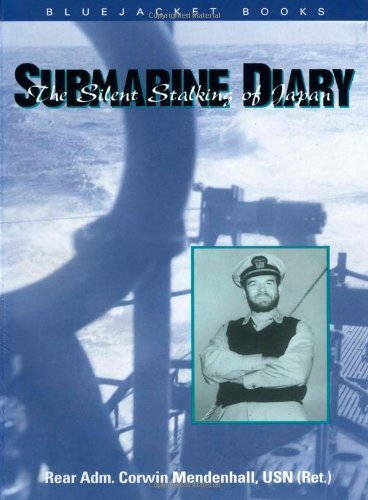
A vividly detailed account of life aboard U.S. submarines in the Pacific during World War II.
An understated but absorbing journal from a veteran of 11 underseas missions in the close quarters of a fleet submarine against Japanese shipping during WW II's Pacific campaigns.
A 1939 graduate of the US Naval Academy.
11 pages added or updated in the last 1 month
Please help to maintain this site by reporting any Errors, Broken Links, Information or Site Issues on this page using this button

If you find this site useful, please consider supporting my work with a small Donation.
Please Note: Donations made using this option go directly to the site owner and not to the Submariners Association.
Thankyou for your support.
A vividly detailed account of life aboard U.S. submarines in the Pacific during World War II.
An understated but absorbing journal from a veteran of 11 underseas missions in the close quarters of a fleet submarine against Japanese shipping during WW II's Pacific campaigns.
A 1939 graduate of the US Naval Academy.
11 pages added or updated in the last 1 month
Please help to maintain this site by reporting any Errors, Broken Links, Information or Site Issues on this page using this button
If you find this site useful, please consider supporting my work with a small Donation.
Please Note: Donations made using this option go directly to the site owner and not to the Submariners Association.
Thankyou for your support.

This form is for you to comment on, or add additional information to this page. Any questions will be deleted. If you wish to ask a question contact the Branch or the Webmaster using the Contact Us page or ask your question on our Facebook Page