Submarine Adoptions
Many naval vessels were 'adopted' by communites either formally or imformally often due to a shared name or historical connection. However the majority of 'formal' adoptions where created during World War 2 as a result of the Warship Week initiative.

During the Second World War, the British Government faced a huge challenge raising the capital needed to support the war effort. Warships Week was a series of fundraising events organised across the country over a period of 24 weeks from 1941-1942. It was hoped that these funds would cover the costs of the expansion in shipbuilding. Between 1941 and 1942, the concept of National Savings was introduced. Each region in the country was provided with a savings target to achieve. This was based on the region's population, with each general level of savings having a class of warship assigned. This became known as Warship Week, due to its similarities with War Weapons Week, which was a drive to replace the materiel lost at Dunkirk through a savings campaign.
A level of savings would be set to raise enough money to provide the cost of building a particular naval ship. The aim was for cities to raise enough to adopt battleships and aircraft carriers, while towns and villages would focus on cruisers, destroyers, submarines, etc. Smaller towns and villages would be set a lower figure. Once the target money was saved for the ship, the community would adopt the ship and its crew.
Towns and districts were tasked with organising fundraising events in which residents were encouraged to subscribe to Government War Savings Bonds and Certificates. In return, the community would gain sponsorship of a Naval Vessel, which would, where possible, involve visits by ships' crews, the exchange of memorabilia and further donations of comforts for the crew members. Nationally, the events were incredibly successful, raising just under £1bn or £46bn in today's money.

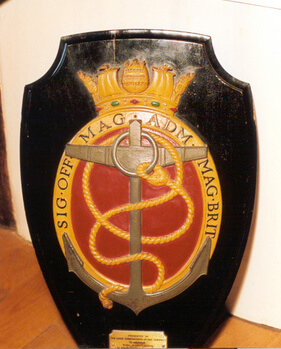
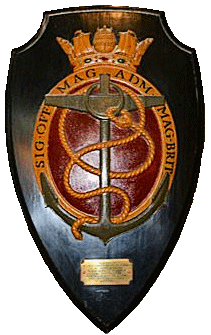
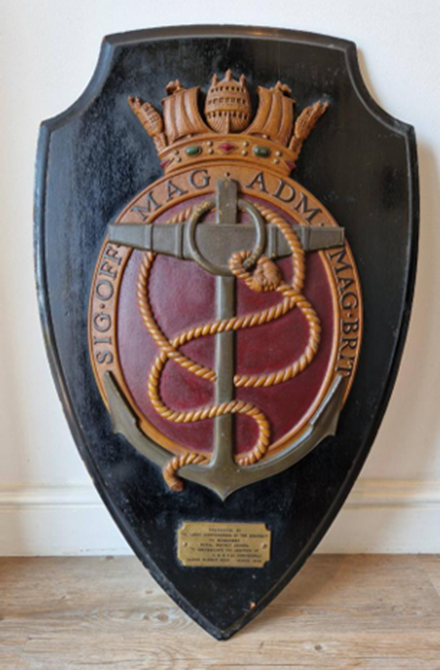
An Adrimalty Crest
Local charity organisations, churches and schools would provide the crews of the adopted ship with gloves, woollen socks and balaclavas. Children would often write letters and send cards to the crew. Whenever possible, officers and men from the adopted ship would visit the local community. To celebrate their visit, a parade would often be organised in their honour.
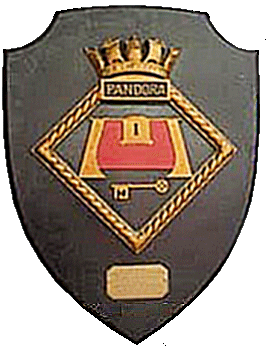
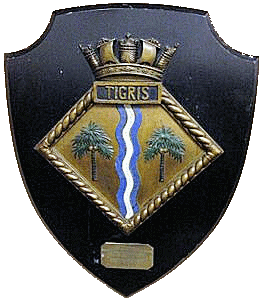
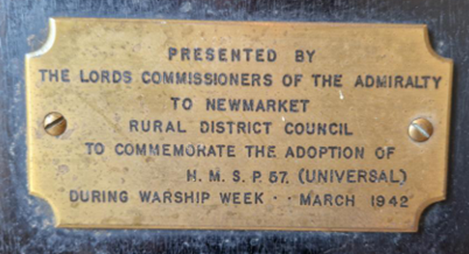
The adoption was usally fomallised by a presentation where the ship's commanding officer would exchange plaques, objects and photographs with the city or town that reached the target set, and an adoption would begin. The plaque provided by the admiralty usually consisted of the ships crest although not all submarines had an official crest, so an Admiralty Crest like the one shown on the right would be presented instead.
The number of warships adopted was over 1,200, number including battleships, cruisers, destroyers, submarines and trawlers. 1200. A press announcement quoted the adoption of eight battleships, four carriers, forty-nine cruisers, three hundred and one destroyers, twenty-five submarines, one hundred and sixty-four corvettes and frigates and two hundred and eighty-eight minesweepers.
Known Submarine Adoptions
The following list has been assembled from information generously provided by Dr Peter Schofield.
All Adoptions Sorted by Boat
Officially adopted by
Stewartry (Kirkcudbrightshire) Warship Week from
25 Apr 1942 to
2 May 1942
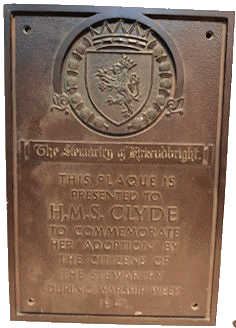
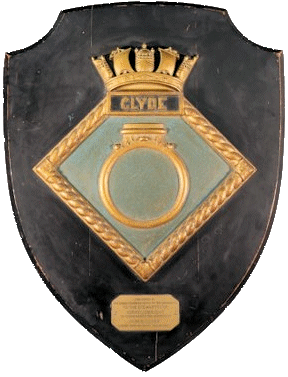
On Monday, 8th March 1943, a ceremony was held in the Town Hall, Castle Douglas, to mark the adoption. The county presented a bronze plaque bearing the county arms to Captain Maitland-Kirwan for the submarine's conning tower. In return, the county received the crest of HMS Clyde.
Dumfries and Galloway Standard, Wednesday 10 March 1943
HMS Clyde was adopted by the Stewartry on Monday. A crest of HMS Clyde was presented to the county and the county gifted a bronze plaque bearing the county arms and an appropriate inscription. The ceremony took place in the Town Hall Castle-Douglas. The plaque to Clyde was presented to Captain Maitland-Kirwan and was to be placed in the conning tower of the submarine. The plaque bore the following inscription: 'This plaque is presented to HMS Clyde to commemorate her adoption by the citizens of the Stewartry during Warship Week.' At the top of the plaque the county arms were cut out in relief. It was hoped that one day the presentation and adoption plaques would be together again (meaning Clyde would survive the war). The greatest care would be taken of the adoption plaque and it would remind them of the great effort made by every section of the community to raise the enormous sum of money and the Clyde was their submarine. He assured Captain Kirwan that the crest would be one of their most precious and valued possessions.
Officially adopted by
Stirlingshire Warship Week from
23 May 1942 to
30 May 1942
Officially adopted by
Dover Rural District Warship Week from
7 Mar 1942 to
14 Mar 1942
Officially adopted by
Lydney Rural District Warship Week from
14 Mar 1942 to
21 Mar 1942
Officially adopted by
East Dean Rural District Warship Week from
14 Mar 1942 to
21 Mar 1942
Officially adopted by
West Dean Rural District Warship Week from
14 Mar 1942 to
21 Mar 1942
Officially adopted by
Framlingham (part of Blyth Rural District) Warship Week from
14 Mar 1942 to
21 Mar 1942
Officially adopted by
Sturminster Rural District Warship Week from
21 Feb 1942 to
28 Feb 1942
Officially adopted by
Mold Urban District and Holywell (part) Warship Week from
7 Mar 1942 to
14 Mar 1942
Officially adopted by
Ilkeston Warship Week from
31 Jan 1942 to
7 Feb 1942
Unofficially adopted by
Barnes WVS from
1940
Officially adopted by
Basingstoke Warship Week from
29 Nov 1941 to
6 Dec 1941
Officially adopted by
Peterborough Warship Week from
29 Nov 1941 to
6 Dec 1941
Peterborough participated in the national Warship Week campaign, raising £410,000, equivalent to over £17 million today.
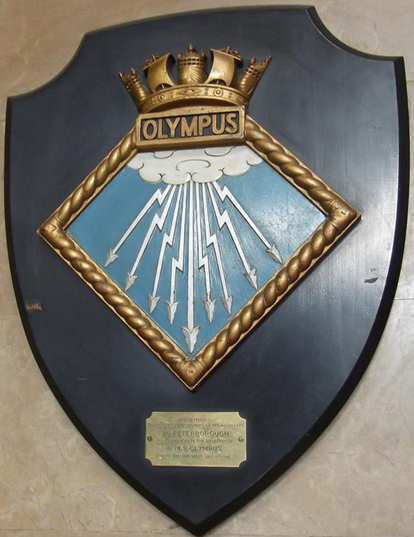
In March 1942, it was announced that the heavy bronze plaque to be affixed in HMS Olympus had been received ready to forward to the Admiralty. Unfortunately, Olympus was lost in May 1942.
Beneath the city arms in bold relief was the inscription 'To commemorate the adoption of HMS Olympus by the citizens of Peterborough and District. Peterborough Warship Week Nov. 29th, Dec. 6th 1941.'
Unfortunately, Olympus was lost in May 1942 and thereafter Peterborough adopted P512 ex US R-1 Class.
Admiralty adoption plaque is held by Peterborough Museum. The Presentation plaque to vessel is held by the Royal Navy Museum.
Officially adopted by
Ilkley Urban District Warship Week from
21 Mar 1942 to
28 Mar 1942
Officially adopted by
Diss, Depwade with Harleston Warship Week from
14 Feb 1942 to
21 Feb 1942
The fundraising goal was £175,000, intended to cover the cost of a submarine hull.
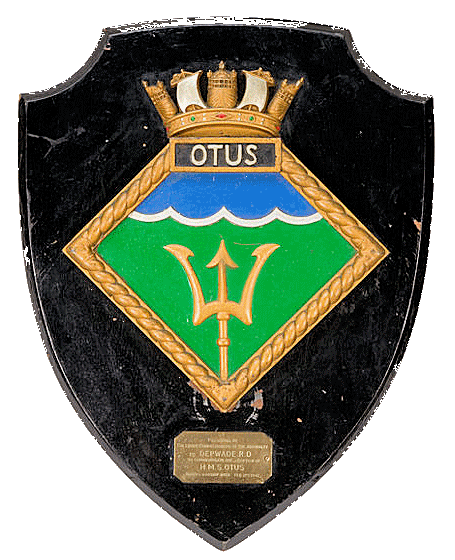
Following the week, the Warship Week Committee was left with a deficit and decided not to present a plaque to HMS Otus; there was no Admiralty requirement to do so. The deficit was greater than the cost of a plaque. Another reason given, was that the district had not reached their target, falling £42,000 short and therefore did not consider it right to present a plaque. A function was held to clear the deficit and the surplus was devoted to sending books each month to the submarine.
However, plaques commemorating the adoption of Otus were presented to Diss Urban District and Depwade Rural District. The Deepwade Rural District adoption plaque appears as: the MALCOLM S. FORBES COLLECTION on the Heritage Auctions Site - America's Auction House. Another piece of Britain's heritage crossing the pond. The Urban District plaque presented to Diss should still be held by the town.
Officially adopted by
Chelsea Warship Week from
21 Mar 1942 to
28 Mar 1942
Officially adopted by
Swindon and District Warship Week from
6 Dec 1941 to
13 Dec 1941
Adopted after their original adoption, HMS Tetracht was lost
Officially adopted by
Glossop Borough Warship Week from
28 Feb 1942 to
7 Mar 1942
Between 28 February and 7 March 1942, Glossop raised £137,000 in National Savings. By the end of the 1942-43 period, the total contributed by the population for warships reached £175,000
The Borough of Glossop, Derbyshire, originally set out to adopt P36 during their Warship Week, Feb 28th to March 7th, 1942, having raised £137,000 in National Savings. P36 was sunk alongside at Malta on April 1st, 1942, and thereafter HMS Truculent was adopted.
Officially adopted by
Holywell and District Warship Week from
21 Mar 1942 to
28 Mar 1942
Officially adopted by
March and North Witchford Rural District Warship Week from
21 Mar 1942 to
28 Mar 1942
Officially adopted by
Selkirk & Galashiels Warship Week from
8 Nov 1941 to
15 Nov 1941
The adoption plaque is held at the Municipal Building, Selkirk. The plaque shown is one of two, the second being presented to Galashiels. Both towns were involved in raising a county target of £350,000 in war savings to adopt the submarine, the final total raised being £405,420.
It was reported that a bronze plaque, commemorating Selkirkshire Warship Week was to be presented to the submarine. The plaque bore the county crest, and was emblazoned with the county motto Leal to the Border the work of Messrs Henshaw, Edinburgh.

Officially adopted by
Boston Municipal Borough and Rural District Warship Week from
14 Mar 1942 to
21 Mar 1942
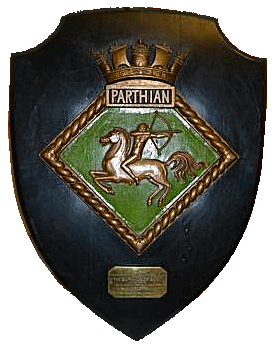
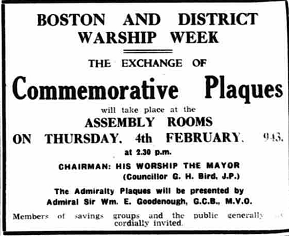
During its warship week, the community raised £342,287 in National Savings. Although plaques were exchanged in early February 1943, the likelihood is that the presentation plaque never reached Parthian as she would have been on active service. Parthian was lost later that year.
Lincolnshire Standard and Boston Guardian, Saturday 2 May 1942
Lord Kindersley, president of the National Savings Committee, has sent the following letter to the Mayor of Boston: Dear Mr. Mayor I am writing to ask you to accept personally and to convey to all others who have contributed to the success of Boston Warship Week my warmest thanks and appreciation. This special effort, resulting in the adoption of HMS Parthian will not only force a closer link between the people of Boston and the Royal Navy, but will also provide a lasting record of their patriotism.
Lincoln Standard and Boston Guardian, Saturday 27 November 1943
A Rural District Committee is making excellent progress in its efforts to stimulate the Savings Campaign in the country areas following the formation of the Committee as a separate organisation, with the task of raising the sum of £225,000 in savings in the thirteen weeks ending on the 31 January, 1944. This figure represents half the cost of replacing HMS Parthian, which was adopted by the town and district in Warship Week 1942, and was unfortunately lost earlier this year. A public meeting will be held at the Town Hall, Kirton. when Mr. H W Butcher, MP. will inaugurate the new Parthian campaign.
Following the loss of HMS Parthian in 1943, a new campaign was inaugurated to raise £225,000, half the cost of a replacement, in early 1944.
Note: A second adoption plaque presented to the Rural District exists somewhere.
Officially adopted by
Stafford including Gnosall Warship Week from
8 Nov 1941 to
15 Nov 1941
A slate tablet commemorating the adoption of HMS Perseus by the Borough of Stafford is located in the Garden of Remembrance in the grounds of St Mary's Collegiate Church in Stafford.
Officially adopted by
Workington Warship Week from
21 Feb 1942 to
28 Feb 1942
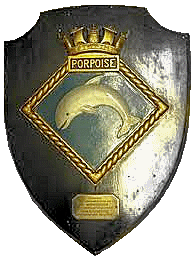
The adoption plaque is held at the Helena Thompson Museum, Workington. With an adoption target of £300,000 the town fell short raising £252,355 in war savings.
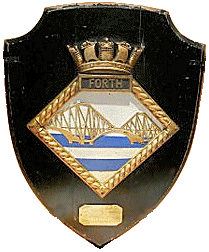
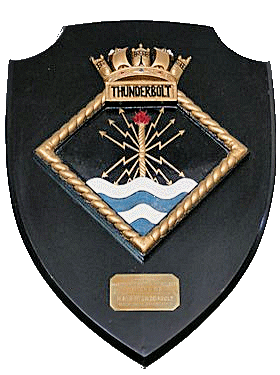
The diamond shaped crest differed from the crest of the post war HMS Porpoise. Today's shapes date from 1940 when it was decided to give new ships a round frame.
HMS Porpoise helped save Malta as Britain's first submarine tanker carrying supplies of aviation fuel and ammunition during the Luftwaffe attacks on convoys. Operating in the Far East, HMS Porpoise was sunk (with all hands) by Japanese aircraft in the Malacca Strait on 19 January 1945.
Lancashire Evening Post, Wednesday 3 March 1943 reported that Lt-Cdr Leslie Bennington, Commander of the submarine HMS Porpoise is visiting Workington soon to accept the boroughs plaque recording that the Porpoise is the towns adopted vessel.
If Leslie Bennington accepted the presentation plaque from Workington and it was kept onboard Porpoise, then it would have been lost along with the submarine.
Officially adopted by
Brighouse Municipal Borough Warship Week from
14 Mar 1942 to
21 Mar 1942
Officially adopted by
Barnsley Warship Week from
10 Jan 1942 to
17 Jan 1942
Officially adopted by
East Dereham Urban District, Launditch and Mitford Rural District Warship Week from
7 Mar 1942 to
14 Mar 1942
The adoption plaque is in Dereham War Memorial Hall
Officially adopted by
East Ham CB Warship Week from
21 Mar 1942 to
28 Mar 1942
Adopted HMS Sceptre after Sahib was sunk in Apr 1943.
Officially adopted by
Inverness Burgh and County Warship Week from
16 May 1942 to
23 May 1942
Adopted HMS Thorough after Saracen was lost in 1943.
Unofficially adopted by
The Scotsman Newspaper from
Nov 1944
Officially adopted by
Buxton Warship Week from
21 Mar 1942 to
28 Mar 1942
Officially adopted by
Heywood Warship Week from
7 Mar 1942 to
14 Mar 1942
Unofficially adopted by
Seal, Kent
Sevenoaks Chronicle and Kentish Advertiser, Friday 17 May 1940
The Admiralty announcement at the beginning of the week to the effect that HMS Seal was overdue and must be presumed lost will occasion much regret among the villagers of Seal (Kent), who only a short time ago decided to adopt the vessel. Since this interesting link with the submarine and village of the same name was established, a regular monthly hamper of comforts in the form of sweaters, socks, books, gramophone records, various games etc. has been sent to the ship's company.
Mrs. Raymond Poland, of Godden Green who was responsible for the adoption idea, found the members of the Women's Institute and other residents willing to cooperate, with the result that the monthly hamper was always ready, and sometimes two. Mrs. Poland has in her possession a number of letters of grateful thanks from the submarine's Commander Lt. Cmdr. R. P. Lonsdale, for the numerous gifts sent, and the officer also expresses the pride felt by his company at being adopted by the village of Seal. In one of his letters, he describes in detail the inspection of his submarine by the King, while in another he expresses warm thanks for an offer of hospitality to himself and members of the crew from Seal village in the event of the submarine returning to Chatham.
Alas, there is little likelihood of this generous offer being accepted, although there is, of course, always the possibility that some at least of the officers and men may be prisoners of war. There hangs in Seal Village Hall a fine picture of the submarine, and on a small tablet underneath is the following inscription: "To the Village of Seal, from the Ship's Company of HMS Seal, 1940."
Officially adopted by
Guildford Rural District Warship Week from
31 Jan 1942 to
7 Feb 1942
Vessel adoption plaque held by the RN Museum. Portsmouth.
Officially adopted by
Barrow-on-Soar Warship Week from
14 Feb 1942 to
21 Feb 1942
Unofficially adopted by
Aylesbury Girl Guides, Sea Guides and Sea Rangers from
Oct 1941
Officially adopted by
Thornbury Rural District Warship Week from
14 Feb 1942 to
21 Feb 1942
Officially adopted by
Truro, St Agnes, Perranzabuloe Warship Week from
8 Nov 1941 to
15 Nov 1941
Adopted after their original adopted boat, HMS Triumph, was lost.
Unofficially adopted by
Esher Girl Guides (Surrey)
The Esher Girl Guides adopted the submarine at the start of the war. The Guides, including Rangers, Guides, and Brownies, regularly sent parcels to the crew and maintained correspondence with them and their families. Following the loss of HMS Shark in July 1940, the Girl Guides continued to support the families of the sailors who were lost.
Surrey Advertiser, Saturday 19 February 1940
The Esher division of the Girl Guides has adopted the submarine HMS Shark and all Rangers, Guides and Brownies have been asked to send parcels to the crew as soon as possible. Claygate Company is to send a parcel shortly.
Birmingham Post, Thursday 1 August 1940
The Esher division of the Girl Guides is sorrowing for the loss of HMS Shark. At the start of the war, the division adopted the Shark, sent parcels to the men and wrote regularly to them and their families. The commander presented the guides with photographs of the submarine and her company, and the crew made them a white ensign with a submarine embroidered in one corner and the Shark motto, 'Celer et Audax' (Swift and Bold) in the other. Now the Guides are in touch with the family of every sailor lost in the Shark, and are taking all opportunities to help them.
Officially adopted by
Epping, Harlow and District Warship Week from
21 Mar 1942 to
28 Mar 1942
The towns surpassed the required £175,000 by February 11 by which time they had amassed £176,000.
Sickle was lost in 1944, after which they adopted the Monitor HMS Roberts.
A fortunate crew member was leading seaman R Brown who was unable to be on the craft at the time of its sinking due to injury.
He wrote the following letter to the Mayor of Epping:
"I feel it is my duty to convey to you all the thanks of my deceased shipmates and myself for the gifts of cigarettes which you so generously sent us. A finer and happier crew would have been hard to find. The intrepid Lt Drummond and his fellow officers were well liked by us all.So in honour of all the boys of the Sickle and my humble self, I say thanks to you all again."
Sickle's Adoption Plaque is kept at Epping Town Hall.
Officially adopted by
Chatham and Welling Warship Week from
3 Jan 1942 to
10 Jan 1942
Officially adopted by
Gillingham Municipal Borough Warship Week from
14 Feb 1942 to
21 Feb 1942
Officially adopted by
Southwell Warship Week from
24 Jan 1942 to
31 Jan 1942
Storm was adopted following the loss of their original adopted boat, HMS Tempest.
Officially adopted by
Selby Urban District and Rural District Warship Week from
21 Mar 1942 to
28 Mar 1942
Officially adopted by
Chipping Sodbury Rural District, Filton Warship Week from
31 Jan 1942 to
7 Feb 1942
Officially adopted by
Alfreton Urban District Warship Week from
31 Jan 1942 to
7 Feb 1942
Adopted following the loss of their original adoption, HMS Upholder.
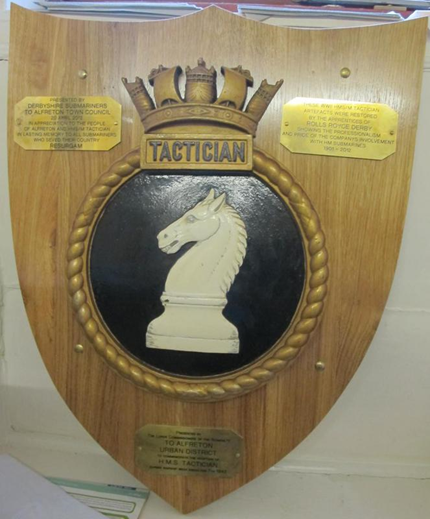
The Tactician plaque was restored by Rolls Royce apprentices in Derby in 2012.
Officially adopted by
Spalding Urban District and Rural District Warship Week from
7 Mar 1942 to
14 Mar 1942
The town and surrounding villages exceeded their targets through parades, exhibitions, and intense, competitive fundraising efforts to "buy" a warship. The Spalding area raised £352,899 during their Warship Week, averaging over £10 per head.
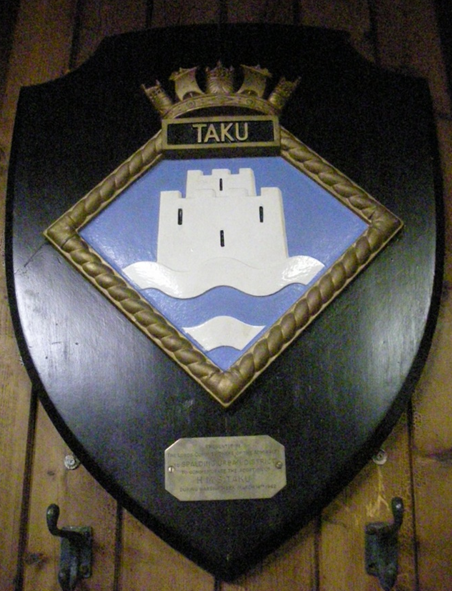
In a presentation held ad Held at Spalding RNA Club and on behalf of the Admiralty, Rear Admiral Buckley of HMS Royal Arthur, presented an adoption plaque to the town and one to the rural district. In exchange, the town and district presented to Taku a plaque mounted on oak, bearing the town's crest. It was inscribed 'To Commemorate the adoption of HMS Taku by the citizens of the urban and rural district of Spalding Warship Week March 1942'.
Unofficially adopted by
Norton Townswomen's Guild from
1940
Officially adopted by
Altrincham Warship Week from
7 Feb 1942 to
14 Feb 1942
Unofficially adopted by
Risedale Central and Barrow Girls Grammar Schools, Barrow in Furness
Officially adopted by
Coalville Urban District, Hugglescote Warship Week from
21 Mar 1942 to
28 Mar 1942
Their original adoption was the Type II Hunt Class Destroyer, HMS Southwold, which was lost on March 24th, 1942, after which Taurus was adopted.
Officially adopted by
Southwell Warship Week from
24 Jan 1942 to
31 Jan 1942
After HMS Tempest was lost 13/2/42 they adopted HMS Storm
Unofficially adopted by
Broadway, Worcestershire
When HMS Terrapin was commissioned in 1944, the village subsequently 'unofficially' took on her adoption. HMS Terrapin was launched and commissioned too late to be included in the Warship Week adoptions, therefore no Admiralty Adoption plaque was awarded, nor a plaque presented to the submarine. Nonetheless, money was raised locally for the supply of comforts for both vessels, just as they were for official adoptions.
From the WWII Submarine News Paper 'Good Morning No. 667' dated Monday 4 June 1945:
From Mr C A Cheetham of Risedale Central School Barrow.
We adopted the Terrapin in the autumn of 1943 when she was completing. The adoption was arranged by Mr. Wheller, an Admiralty Overseer at Barrow, who has been instrumental in three or four schools in Barrow adopting new submarines. The ceremony of adoption took place before the assembled school in the presence of the Commander, then Lt. D. Martin, triple DSO, his officers and ratings. Admiralty and Vickers-Armstrong representatives and the Director of Education.
The Commander addressed the scholars, and they all saw his latest decoration which he had received from the King the previous day, and various Officers and Petty Officers also spoke. We had collected a large number of comforts for the new crew, card games of all kinds, new packs of cards, dominoes, draughts, almost any game you care to mention, games of chance and skill. The girls had knitted socks and the scholars gave up their sweet coupons, some of their grand-fathers gave us the whole quarter-years sweet coupons for our submarine. We had books and illustrated magazines. These were all displayed on tables at the ceremony.
The Captain presented us with a copy of the submarine's coat of arms (submarine crest?), beautifully carved in oak, and the school presented the ship with a Jolly Roger flag (which, incidentally, is now well decorated from all we hear).
The submarine was still here when we held our Christmas parties and we invited all the crew in three sections to our three parties. They thoroughly enjoyed the dancing, games, concert and tea at the parties, and we sent them off on their Christmas leave with each member of the crew who had children having two toys for each child, the toys made at school (dolls in the needlework room and wooden toys in the woodwork room).
Before she sailed for trials, the staff visited the submarine. Since the submarine sailed, we have from time to time, sent parcels for the crew, sea-boot stockings, cards, books, magazines, diaries (naval) for each member of the crew, a gross of razor blades, games of all kinds, and just before Christmas we sent 2,500 cigarettes, and combs, housewives etc. On one occasion the five parcels we sent weighed altogether ½cwt. In each parcel the scholars sent personnel letters to the members of the crew who they got to know at the parties and Adoption Ceremony, and many of the children write periodically and receive personal letters.
We are hoping when the ship gets back to England the crew will visit the school for a reunion, and that they will give us the Jolly Roger with its decorations. If there is any way in which we can help the crew, we are only too glad to do so. We have the money, given by the children, but there is not much we can buy. There you have it, "Terrapin" so if you want, don't be afraid to ask.
Incidentally, I hope you like the sketch of your coat of arms drawn by 13 year-old Ken Beach.
HMS Broadway (ex USS Hunt), one of fifty American destroyers purchased by the British Government in September 1940, was 'unofficially' adopted by the people of the village of Broadway, Worcestershire.
Officially adopted by
Swindon and District Warship Week from
6 Dec 1941 to
13 Dec 1941
HMS Tetrarch was lost 27/10/41 after which they adopted P222
Officially adopted by
Borough of Bedford, Kempston Urban District and Bedford Rural District Warship Week from
21 Feb 1942 to
28 Feb 1942
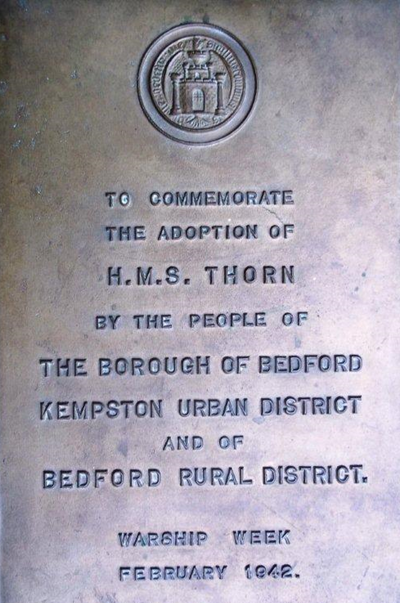
The whereabouts of HMS Thorns Adoption Plaque from the Admirlty to the people is unknown. Unfortunately, the exchange of the presentation and adoption plaques did not take place, as HMS Thorn was reported missing before the planned date of the ceremony.
Officially adopted by
Shoreditch Warship Week from
21Mar 1942 to
28 Mar 1942
Officially adopted by
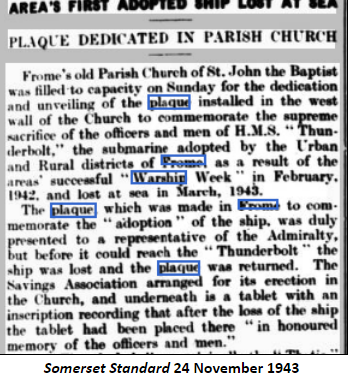
Frome and District (Urban District and Rural District) Warship Week from
14 Feb 1942 to
21 Feb 1942
The town set an ambitious goal to raise £175,000 (roughly £7 million today) to fund the vessel's operations, a target they successfully met during their Warship Week.
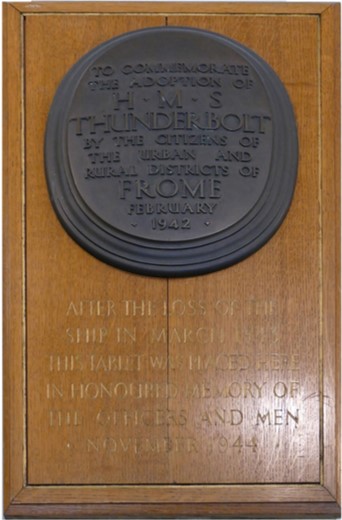
The Somerset Standard reported the presentation of plaques by Vice Admiral Sir Robert A Hornell, KBE, DSO, to the Councils in the Grand Cinema on Friday, 12 March 1943, and the presentation of a plaque from the Councils to the Admiralty.
The opportunity to install the plaque in Thunderbolt never arose, and none of her officers visited Frome. The presentation plaque was mounted on wood and hung in the Parish Church after the loss of HMS Thunderbolt. It is now in the foyer of Frome Memorial Theatre.
Officially adopted by
Newbury Borough and Rural District Warship Week from
7 Feb 1942 to
14 Feb 1942
The vessel adoption plaque is held by the RN Submarine Museum. The Rural District adoption plaque is at Newbury Sea Cadet Centre.
Officially adopted by
Paignton Warship Week from
21 Feb 1942 to
28 Feb 1942
Officially adopted by
Leyton Municipal Borough Warship Week from
21 Mar 1942 to
28 Mar 1942
Vessel Presentation Plaque held by the RN Museum. After the loss of Traveller, HMS Trespasser was subsequently adopted.
Officially adopted by
Leyton Municipal Borough Warship Week from
21 Mar 1942 to
28 Mar 1942
HMS Trespasser was adopted following the loss of their original adopted boat, HMS Traveller.
Officially adopted by
Tarvin Rural District Warship Week from
7 Feb 1942 to
14 Feb 1942
Officially adopted by
Dursley Rural District Warship Week from
7 Feb 1942 to
14 Feb 1942
Officially adopted by
Truro, St Agnes, Perranzabuloe Warship Week from
8 Nov 1941 to
15 Nov 1941
Adopted HMS Shakespeare after Triumph was lost.
Officially adopted by
Gosport Warship Week from
14 Feb 1942 to
21 Feb 1942
Officially adopted by
Glossop Borough Warship Week from
28 Feb 1942 to
7 Mar 1942
The Borough of Glossop, Derbyshire originally set out to adopt P36 during their Warship Week Feb 28th to March 7th 1942, having raised £137,000 in National Savings.
P36 was sunk alongside at Malta on April 1st, 1942 and thereafter HMS Truculent was adopted. Although Truculent appears to have an unofficial badge, a standard Admiralty shield for vessels without official badges was presented to Glossop.
Officially adopted by
Aylesbury Warship Week from
7 Mar 1942 to
14 Mar 1942
Officially adopted by
Bridgend Warship Week from
15 Nov 1941 to
22 Nov 1941
Bridgend adopted HMS Urge after raising £215,623 during their Warship Week. HMS Urge was lost in April 1942 and thereafter HMS Tudor (P326) was adopted.
It is believed that the Royal Navy Museum holds the adoption plaque for HMS Tudor.
Officially adopted by
Aldershot Warship Week from
14 Feb 1942 to
21 Feb 1942
The adoption plaque is held by the Aldershot Military Museum.
Officially adopted by
Fleetwood Warship Week from
14 Mar 1942 to
21 Mar 1942
Officially adopted by
Clackmannanshire Warship Week from
11 Apr 1942 to
18 Apr 1942
The plaque from HMS Ultimatum is held at the RN Submarine Museum.
Officially adopted by
Radcliffe Warship Week from
21 Mar 1942 to
28 Mar 1942
Officially adopted by
Pontadarwe Warship Week from
14 Mar 1942 to
21 Mar 1942
Officially adopted by
Horsham Urban District and Rural District Warship Week from
21 Feb 1942 to
28 Feb 1942
The Urban and Rural districts each received their own plaque.
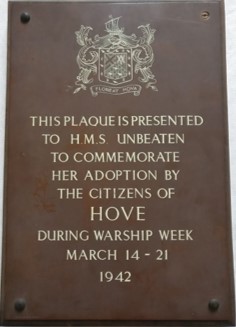
Officially adopted by
Hove Municipal Borough Warship Week from
14 Mar 1942 to
21 Mar 1942
The government set a target of £425,000 for the town, based on its population. Hove significantly exceeded this, raising £521,000, equivalent to approximately £10 for every man, woman, and child in the town.
The town used a clever mnemonic for the campaign: "Hove Must Save - Unite Now By Effectively Adding To England's Navy".
Officially adopted by
Chesterfield Rural District Warship Week from
7 Mar 1942 to
14 Mar 1942
Officially adopted by
Amersham and District Warship Week from
14 Mar 1942 to
21 Mar 1942
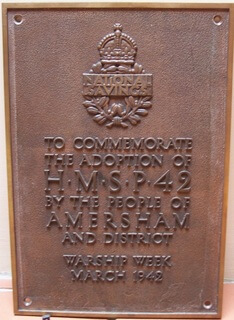
The district, encompassing surrounding villages, raised a total of £540,216 (equivalent to over £25 million today).
Bucks Herald, Friday 16 July 1943
In March last year the Amersham District Warship Week raised over half-a-million pounds and this amount provided a new submarine. A newly-built vessel, HMS Unbroken, was allotted to the district and was placed in commission soon afterwards. The commemorative plaques which mark the occasion, one of which will adorn the Amersham Rural District Council and the other to be installed in the submarine, should have been formally handed over during Wings for Victory Week, but difficulties arose which prevented the function being held. Arrangements for the ceremony are progressing and the handing over will, it is hoped be carried out shortly. In the meantime, HMS Unbroken has made naval war history, and under the command of 28-year old Alastair Mars, DSO, she has recorded a bag of four supply ships and a tanker, sunk in the Mediterranean, two cruisers put out of action, three attacks of railways and bridges and four other special operations. The vessel and her gallant crew have survived more than 300 depth charges all around the submarine.
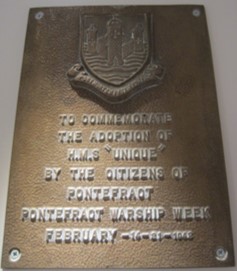
Officially adopted by
Pontefract Warship Week from
14 Feb 1942 to
14 Feb 1942
Pontefract's Warship Week exceeded its £200,000 target to raise £217,976. HMS Unique was adopted.
Good Morning, Tuesday 14 August 1945:
Seven members of the crew of Upstart recently spent a weekend at Pontefract, the guests of Upstarts Comforts Fund Committee. The visitors were Sub-Lt. Turbett, P.O. Best, A.B. Francis, A.B. Stoker. Leading Stoker Walker, A.B. Webb and Signalman Long. They were met on Friday afternoon by members of the committee including the chairman, Mrs. F. Pybus, and the secretary, Miss E. Waddington; and they were entertained to tea. Later in the day, they were accompanied by members of the committee to a Civic Reception and Dinner at which the Mayor of Pontefract presided. The following day, Upstart visited Dunhill's Liquorice Works, and as a memento of his visit, each man received a box of sweets from the management. These came in handy in the afternoon when they visited Pontefract race meeting, and their day ended with a visit to the home of Mrs. Pybus for tea. At trip to Pontefract Castle occupied the Sunday morning, and after lunch in the town, Upstart received a grand send off from the Mayor and members of the Comforts Fund. It was a weekend which they will remember.
Unique was lost in October 1942, and HMS Upstart was then adopted.
Officially adopted by
Ashby-de-la-Zouch Urban District and Rural District Warship Week from
14 Mar 1942 to
21 Mar 1942
Both the Urban District and Rural District adoption plaques are held by the Ashby-de-la Zouch Museum
Officially adopted by
Chesterton, South Cambridgeshire Rural District, Newmarket Rural District Warship Week from
21 Mar 1942 to
28 Mar 1942
This is the Admiralty Adoption plaque for Newmarket Rural District. Chesterton and South Cambridgeshire Rural District were also involved in raising the target of £425,000 in savings to adopt the submarine. Newmarket Rural Districts target was £100,000 and the three areas together raised £666,251.
Chesterton and South Cambridgeshire Rural District would also have received plaques.
Officially adopted by
Castelford Urban District Warship Week from
14 Mar 1942 to
21 Mar 1942
Unofficially adopted by
Star Road LCC School, West Kensington
Officially adopted by
Colchester Municipal Borough, Wivenhoe Urban District Warship Week from
14 Mar 1942 to
21 Mar 1942
The adoption plaque is in Colchester Town Hall.
Officially adopted by
Leek Urban District and Rural District Warship Week from
21 Mar 1942 to
28 Mar 1942
Officially adopted by
Staines Warship Week from
21 Mar 1942 to
28 Mar 1942
Officially adopted by
Sowerby Bridge Urban District Warship Week from
21 Mar 1942 to
28 Mar 1942
Officially adopted by
Alfreton Urban District Warship Week from
31 Jan 1942 to
7 Feb 1942
After Upholder was lost, they adopted HMS Tactician.
Officially adopted by
Bury St. Edmunds, Thingoe and Thedwastre Warship Week from
28 Feb 1942 to
7 Mar 1942
Officially adopted by
Cirencester and District Warship Week from
7 Mar 1942 to
14 Mar 1942
£428,019 was raised in Warship Week. Plaques, along with other adoption memorabilia, are held at the Bingham Library in Cirencester.
Officially adopted by
Pontefract Warship Week from
14 Feb 1942 to
21 Feb 1942
HMS Unique was originally adopted by Pontefract but lost in October 1942; HMS Upstart was then adopted.
Officially adopted by
Bridgend Warship Week from
15 Nov 1941 to
22 Nov 1941
The town aimed to fund a submarine to support the war effort. They successfully raised £300,000, exceeding expectations.
Bridgend first adopted HMS Urge after raising £215,623 during their initial Warship Week. It is believed that the Royal Navy Museum holds the adoption plaque for HMS Tudor.
HMS Urge was lost in April 1942, and thereafter HMS Tudor (P326) was adopted.
In 2011, to mark the 69th Anniversary of the submarine's disappearance, a plaque honouring HMS Urge and its 29-strong crew and 10 passengers was rededicated to the people of Bridgend in recognition of their efforts.
The commemorative plaque for HMS Urge resides at the Local and Family History Centre at Ty'r Ardd, Bridgend.

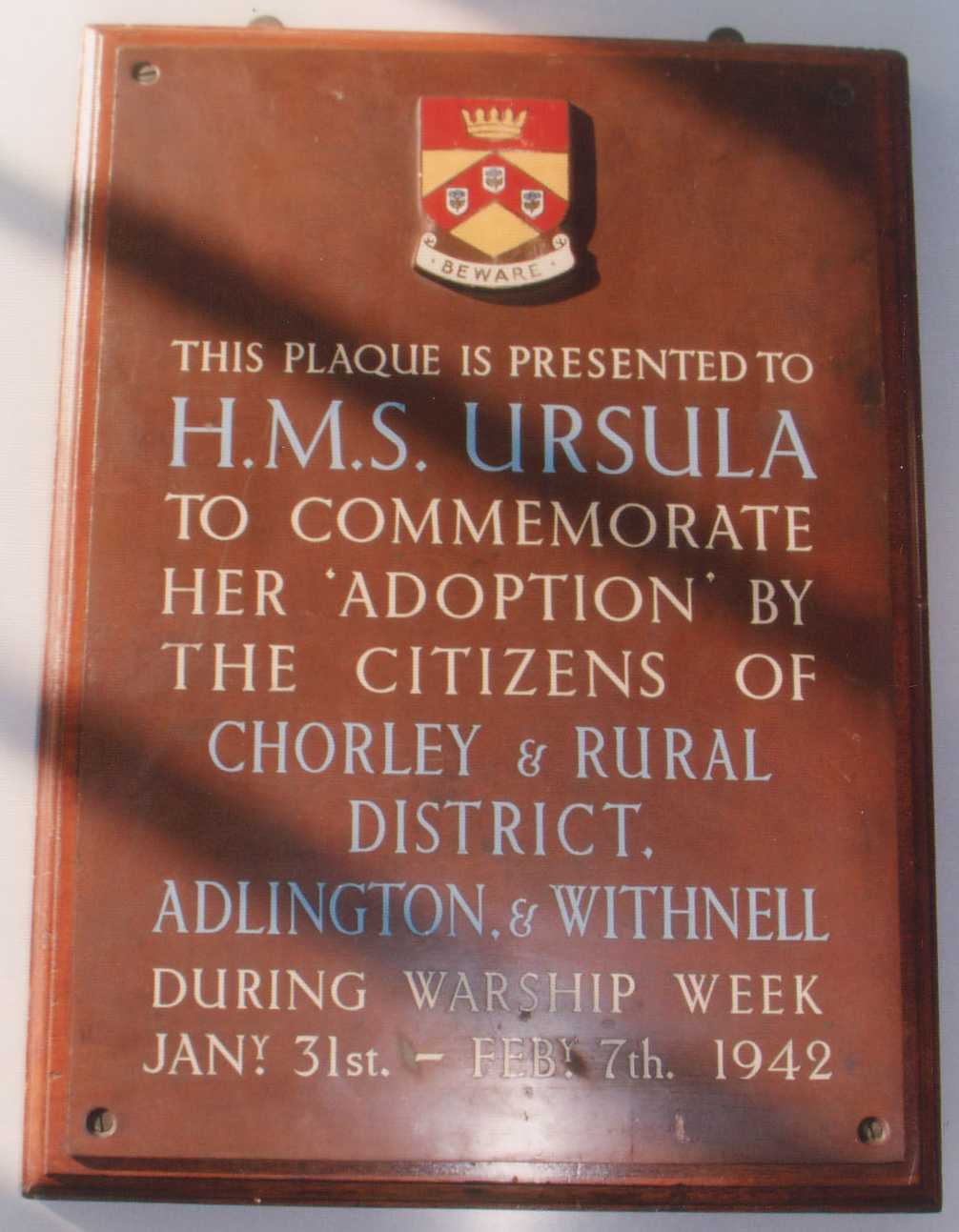
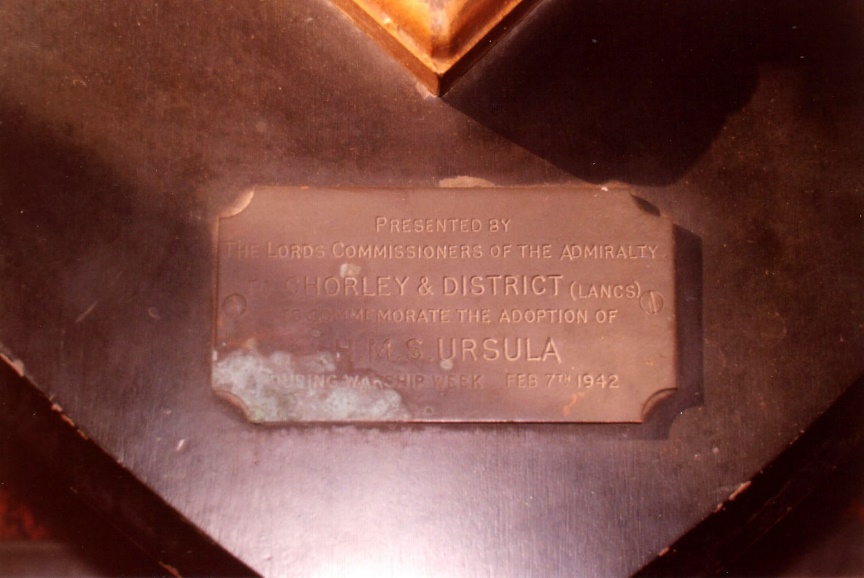
Officially adopted by
Chorley and District (Withnell and Adlington) Warship Week from
31 Jan 1942 to
7 Feb 1942
During the Chorley and District Warship Week, £387,354 was raised in National Savings to adopt HMS Ursula, far exceeding their £175,000 target (equivalent to over £20 million today).
In October 1943, 11 members of the HMS Ursula crew visited Chorley Town Hall. They presented a plaque with the submarine's crest to the mayor as a thank you for the town's support.
Urban and Rural District Adoption and Presentation Plaques are held at Astley Hall.
Liverpool Echo, Tuesday 20 April 1943
HMS Ursula has been adopted by Chorley, Withnell and Adlington in Lancashire. She has also been 'unofficially adopted' by the staff of a large laundry firm at Rhyl, North Wales, who's war comforts committee of 200 girls, all employed on Government work, have already exchanged greetings with the crew, and supplied them with woollen clothing, sportswear and a darts board.
Lancashire Evening Post, Tuesday 20 April 1943
The Mayor of Chorley has sent the following telegram to the Admiralty: On behalf of the inhabitants and district of their adoption, I ask you to please convey to the officers and men of HM submarine Ursula congratulations on a safe return home from their hazardous exploits.
Officially adopted by
Stroud and Nailsworth District Warship Week from
21 Mar 1942 to
28 Mar 1942
The submarine's plaque is held at the RN Submarine Museum.
Officially adopted by
Wye Warship Week
Officially adopted by
Prestwich Warship Week from
28 Feb to 1942 to
7 Mar 1942
The communities of Prestwich donations included a football kit donated by Sedgley Park toward HMS Utmost.
The presentation plaque used to be in Prestwich Memorial Hall, but was relocated to Bury with the Jolly Roger. A further plaque to HMS Utmost is in the Remembrance Chapel in St Mary's Church.
Officially adopted by
Llwchwr Warship Week from
21 Mar 1942 to
28 Mar 1942





This form is for you to comment on, or add additional information to this page. Any questions will be deleted. If you wish to ask a question contact the Branch or the Webmaster using the Contact Us page or ask your question on our Facebook Page