Having completed submarine training in the UK, and having passed professionally for Leading Seaman, I found myself stationed at HMS Dolphin, a shore establishment at Portsmouth. Dolphin was the home of Royal Navy submarines.

It wasn't long before I was informed that I was to join a troopship leaving for Gibraltar where I was to report to Senior Officer Submarines in HMS Maidstone, which was a submarine depot ship designed specifically to cater for the needs and requirements of submarines based at Gibraltar.
Within a few days, the troopship arrived at Gibraltar (the gateway to the Mediterranean as it is known). The rock itself was a most impressive sight, as it appeared through the heat haze of the morning sun, surrounded completely by the land of neutral Spain.
The small contingent of naval personnel left the troopship, conscious of the thousands of soldiers' eyes watching our departure. I was amongst the small detachment; the troopship went on its way to North Africa.
As I stood there on the harbour wall taking in the scene of the naval vessels: cruisers, destroyers and aircraft carriers, in the harbour, there at the other end was HMS Maidstone with two of its 'chicks' alongside, two S Class submarines. I was transported to 'mother' Maidstone.

I was allocated accommodation in the submarine Spare Crew section of the depot ship. We submariners were out-numbered by the remainder of the depot ship's company who, in the main, were technicians, not submariners, and as such, they were fully qualified to service the complicated demands of maintenance required to render the submarines fit for sea patrols.
We, as Spare Crew, just sat in the wings as it were, waiting for a call to enter the stage. We were replacements.
A few of us sailors decided to go ashore as we termed it (disregarding the actuality that the depot ship was tied up at the South Mole jetty).
It was just a fairly short walk into the town of Gibraltar. It being a garrison town, there were soldiers, soldiers everywhere, in fact it boasted just one main street, but many little Spanish type bars where, just passing by, one could whiff the smell of wine. These small bars were more than popular: they were literally packed out by the serious drinking types of servicemen. There was no social life ashore such as dancing and other delights; women were at a premium, and virtually no locals were seen or allowed to be seen. It was a man's world, all right, oh yes. There was the occasional British servicewoman accompanied by high-ranking officers who were billeted in the one and only hotel, aptly named 'Rock Hotel'. There were the bazaars displaying beautiful scarves, lace etc. I, in fact, bought my wife a silk dressing gown.
So in furthering the description of Gibraltar and the high street and the imposing rock towering down over this scene, there was at one end of the town a cutting through the rock (man made). A short tunnel pathway led to a beach which was a very popular place to be, and the swimming was excellent.
Looking up from the beach, a few hundred feet above was an unsightly unnatural vast slab of man-made concrete just smeared over the lower region of the flat part of the rock. On enquiring about this monstrosity, one would be informed: "Oh, that is a water rainfall catchment for drinking only" (fresh water was at a premium). One washed and bathed in saltish water and a special type of soap tablet available very nearly gave a lather.
Back to the main street with its many hundreds of servicemen wandering up and down this one road, looking for a bar where they could actually squeeze in, tempers getting a little frayed, then of course, the inevitable drunken brawl. This lack of social activities led me to wish an incoming submarine needed, through sickness or injury, a replacement, preferably in my case, a Second Coxswain. Oh to get away from Gibraltar!
After a few weeks, I passed examinations and was rated up to Petty Officer.
It was late evening, and as the duty Petty Officer, I was called to the cabin of Senior Officer Submarines who informed me that I was to make myself available at 2am and be on the jetty at that time, where he would meet me and "don't tell anyone", he said.
"Do I need to pack my seagoing gear?" I enquired. The Commander smiled at me at the same time screwing his lips, shaking his head. I left the cabin shaking my head, pondering my mysterious assignment scheduled for 2am.
It was just 2am that morning as I walked down the gangway of HMS Maidstone in the stillness of the early hours. There in the shadows of the jetty was the Commander. He briefly explained the situation as we walked along the jetty towards HMS Seraph, lying just astern of HMS Maidstone. After a few minutes, a car pulled up alongside us and there emerged a tallish American General and his aide. They quickly made their way over the narrow gangplank and down onto submarine Seraph. The Captain, Lt J Jewell, appeared on the bridge conning tower and waved to the Commander and myself as we pulled the gangplank off the submarine onto the jetty and also dragged the mooring ropes ashore. Submarine Seraph quietly, on its electric motors, slipped its way out of the harbour unseen and unheard on its way to the allocated mission.

Three to four days after, HMS Seraph crept back into Gibraltar during the early hours of the morning in the same mysterious manner as it had departed. Later I went down to HMS Seraph with a parcel, handing it to a friend of mine. The parcel contained the silk dressing gown I had purchased ashore. He would post it for me in England addressed to my wife. Seraph was going back home.
I learnt much later, in fact, after the war, what the secret mission involving a high-ranking General of the American army was all about. Major military events records now reveal that the clandestine events that took place based on Gibraltar as described on 22 and 23 October 1942 involving HMS Seraph (and my minute involvement) was the forerunner to 'Operation Torch'.
The high-ranking General who had boarded Seraph in the early hours of 21 October 1942 was General Mark Clark, his mission to land on a beach 100km from Algiers and meet with representatives of the anti-vichy French Resistance movement and seek their co-operation when the planned attack forces landed on the Algerian coast. The German army would then find themselves sandwiched between the British army in the east and the American army in the west of the Mediterranean coastline of North Africa.
'Operation Torch', North Africa landing of troops was successfully made on 8 November 1942. Soon after this landing the Germans, for a change, were on the run and were thrown out of North Africa.
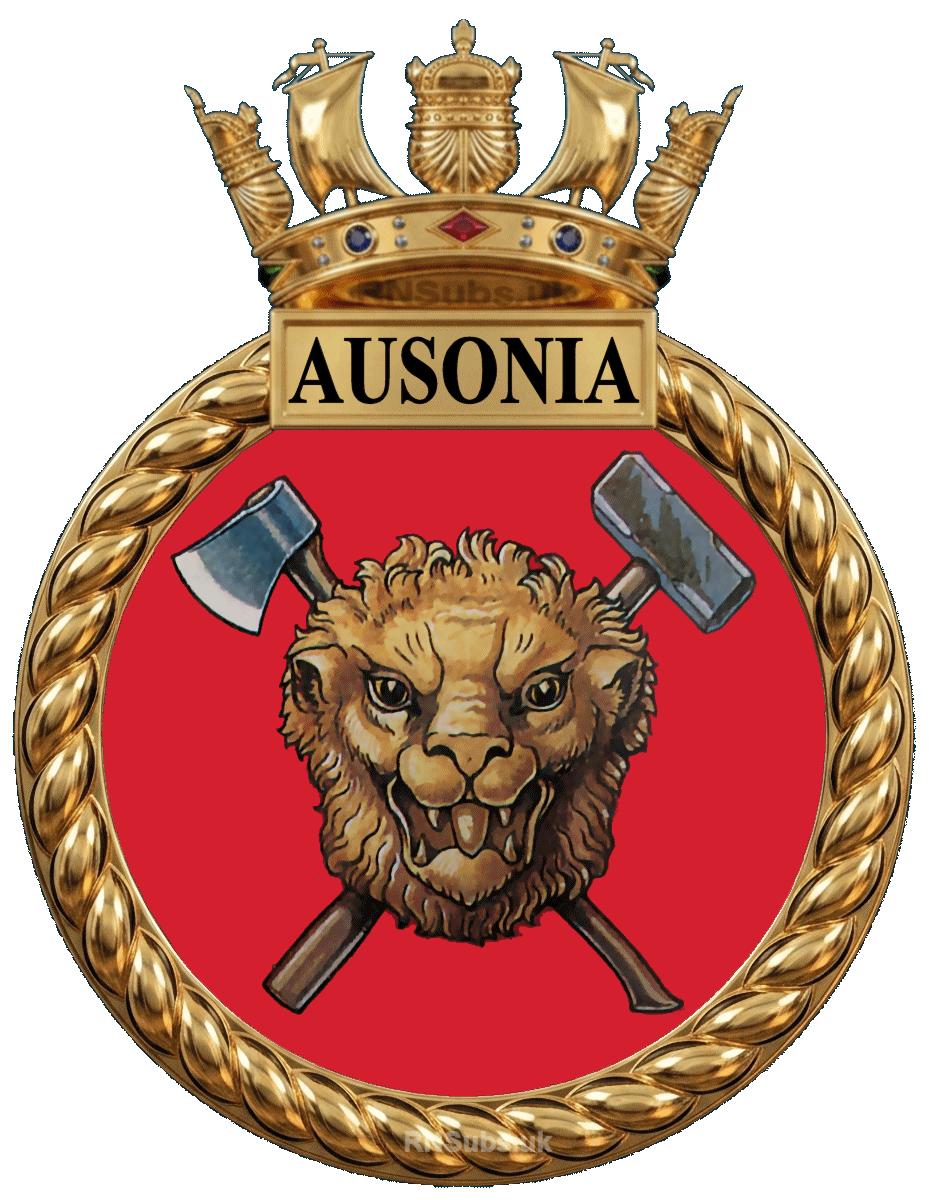
| Class: | Depot Ships |
| Built By: | Swan Hunter (Tyne) |
| Build Group: | F17 |
| Fate: | |
| Decommissioned at Portsmouth in September 1964 and scrapped in August 1965 at Castellon, Spain. | |

A World War 2 drama that highlights the characters (all aged only between 19 and 23 years) as much as the actual events.
The British submarine Sea Tiger's crew is looking forward to a long shore-leave after months at sea. This is cut short when they are ordered to pursue and sink the German battleship Brandenburg. The crew's sub-Commander (John Mills) struggles to fulfil the mission despite discovering that the battleship is heavily defended.
Along the way Sea Tiger encounters many obstacles and once the crew has attempted to sink the battleship they have to escape knowing that they are about to run out of fuel.
13 pages added or updated in the last Array month
Please help to maintain this site by reporting any Errors, Broken Links, Information or Site Issues on this page using this button

If you find this site useful, please consider supporting my work with a small Donation.
Please Note: Donations made using this option go directly to the site owner and not to the Submariners Association.
Thankyou for your support.
| Class: | Depot Ships |
| Built By: | Swan Hunter (Tyne) |
| Build Group: | F17 |
| Fate: | |
| Decommissioned at Portsmouth in September 1964 and scrapped in August 1965 at Castellon, Spain. | |
A World War 2 drama that highlights the characters (all aged only between 19 and 23 years) as much as the actual events.
The British submarine Sea Tiger's crew is looking forward to a long shore-leave after months at sea. This is cut short when they are ordered to pursue and sink the German battleship Brandenburg. The crew's sub-Commander (John Mills) struggles to fulfil the mission despite discovering that the battleship is heavily defended.
Along the way Sea Tiger encounters many obstacles and once the crew has attempted to sink the battleship they have to escape knowing that they are about to run out of fuel.
13 pages added or updated in the last Array month
Please help to maintain this site by reporting any Errors, Broken Links, Information or Site Issues on this page using this button
If you find this site useful, please consider supporting my work with a small Donation.
Please Note: Donations made using this option go directly to the site owner and not to the Submariners Association.
Thankyou for your support.
This form is for you to comment on, or add additional information to this page. Any questions will be deleted. If you wish to ask a question contact the Branch or the Webmaster using the Contact Us page or ask your question on our Facebook Page