It was the early months of World War II that the biggest rescue of all took place. John Masefield, Poet Laureate, described this event as the "Seven Day Miracle".
England was at war with Germany, 1939. I was not yet eighteen years old at the time. I managed to join the Royal Navy under the regulations of being classified as a boy entrant; this rating would change at my becoming eighteen a few months hence. The early few month period of the war, in respect of living in England, was a reasonably quiet affair.
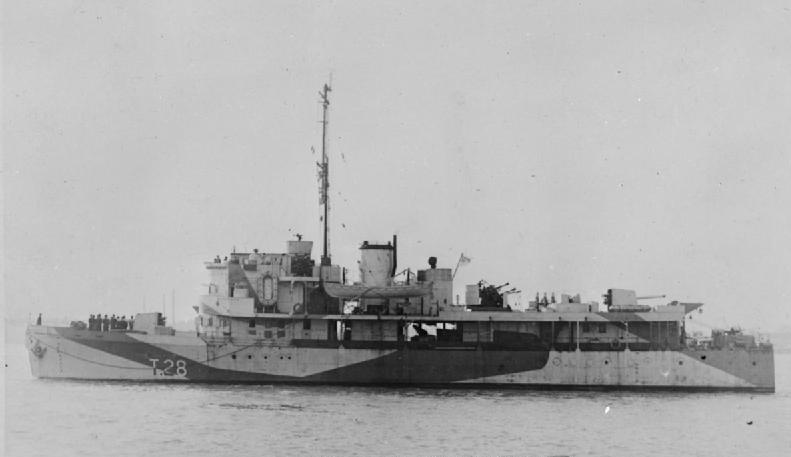
I had completed the basic training to become an Ordinary Seaman and was drafted to HMS Locust, a ship specifically designed to operate on the rivers of China. The ship had the unusual design of being a flat bottom craft, which meant it could operate in just about four feet of water. The ship was a river gunboat. Whenever there have been uprisings in China, the British would send in a gun boat (Gun Boat Diplomacy). A river ship was not intended to do battle on the open seas.
The war was by now in full swing, and the Germans had overrun Belgium, Holland and France. There was an area around Dunkirk, northern France, where many thousands of troops found themselves cornered, backs to the sea.
The ship I was serving in, HMS Locust, was based at Sheerness, a coastal town at the mouth of the Thames. Our job was to guard the Thames estuary shipping, as the convoys assembled, and also to encounter the German aircraft sowing mines in the convoy lanes.
It was early afternoon. Our ship, among others, was in harbour for a rest period. I was sitting on the upper deck, in conversation with a Signalman friend of mine, when he jumped up quickly and drew my attention to the fact that nearly all ships were flashing their signal lamps, in response to the base signal station. There was a bit of a panic going on, he explained to me. "All ships, repeat, all ships to prepare for sea". He then, too, reported to the Duty Officer.
Naval shore patrols were instructed to round up all naval personnel in this small town of Sheerness and send them all back to their respective ships, that emptied all the pubs!
That afternoon found us amongst many other ships, hundreds in fact, all sizes, motor boats, yachts heading across the English Channel, heading for a place called Dunkirk, northern France. As we approached this town, from many miles out, we saw a heavy black cloud of oily smoke. A fuel gasometer had been bombed and was ablaze.
On getting nearer, binocular distance, one could see the sandy beach shoreline literally covered with what looked like a moving mass of small animals. On closer inspection, they were, in fact, thousands of soldiers. Our ship moved in very close to the sandy beach, much closer than any other type of ship would dare. Our flat bottom enabled us to pick up many, many soldiers quickly.
Whilst this was going on, I was standing at my action station, manning a twin Lewis gun. I had never ever fired a machine gun before. I wasn't expected or trained to fire. The Petty Officer standing beside me was, though. Oh yes! I knew one had only to squeeze the trigger to activate the gun. Anyhow, that was the Petty Officer's job.
The dreaded German Stuka bomber planes were overhead. These planes would come diving down, almost in a vertical dive at their target, with a siren screaming out loudly, a very frightening wail of a sound, then the bomb was released at the target, the Stukas pulling out of the dive to regain height. The German attack planes were overhead, seeking out which target they would choose. Some pilots elected to go for the helpless soldiers on the beach. The effect of these bombs was rather nullified as they exploded in the sand dunes, but nevertheless, caused many injuries. Many ships loaded up with troops were bombed and sunk by these Stuka dive bombers.
Our ship was now fully loaded with soldiers. We were about to leave the danger area now. My Petty Officer had been called away on some urgent matter. The dive bombers came down again, attacking our ship this time. I was at a complete loss to obey orders shouted down to me: "Open fire port Lewis, open fire! Open fire!"
I wanted to shout back: "You have never trained me to fire, have you? I'm only eighteen, remember!". But of course, I did no such thing. A Stuka bomber was poised overhead about a few hundred feet above our ship. The bomber came literally screaming down (at me personally, I thought). More orders shouted down to me from the bridge. "Open fire! Open fire!" I pointed the machine gun directly straight up in the air, my eyes squeezed tightly shut, my fingers squeezed tight, pressing the firing trigger. I was waiting for the bomb to explode on me.
I was told afterwards the pilot had neatly dodged over the upward fire. The tracer bullets made the job easy for the pilot to dodge this line of fire. To avoid being hit, he chose another target at the last second. My Petty Officer returned to me, applauding the action I had taken. (I forgot to tell him that my eyes were shut).
The ship returned to Dover and we unloaded our human cargo. We returned to Dunkirk again and again. Thousands and thousands of troops were rescued from the beaches of Dunkirk, 338,000 in fact.
This then must be the biggest rescue ever.
For the last ten years, teams of divers have scoured waters off the North East and Yorkshire Coast looking for the last few missing German U-Boats from World War One.

Woven between the recipes in this book are true facts and tid-bits about the food, the cooks and general life aboard ship.
Along with the recipes, this book aims to preserve a segment of British history, Royal Navy social history, which is fading all too quickly and would otherwise be lost in the grey sea-mists of oblivion.
13 pages added or updated in the last Array month
Please help to maintain this site by reporting any Errors, Broken Links, Information or Site Issues on this page using this button

If you find this site useful, please consider supporting my work with a small Donation.
Please Note: Donations made using this option go directly to the site owner and not to the Submariners Association.
Thankyou for your support.
For the last ten years, teams of divers have scoured waters off the North East and Yorkshire Coast looking for the last few missing German U-Boats from World War One.
Woven between the recipes in this book are true facts and tid-bits about the food, the cooks and general life aboard ship.
Along with the recipes, this book aims to preserve a segment of British history, Royal Navy social history, which is fading all too quickly and would otherwise be lost in the grey sea-mists of oblivion.
13 pages added or updated in the last Array month
Please help to maintain this site by reporting any Errors, Broken Links, Information or Site Issues on this page using this button
If you find this site useful, please consider supporting my work with a small Donation.
Please Note: Donations made using this option go directly to the site owner and not to the Submariners Association.
Thankyou for your support.
This form is for you to comment on, or add additional information to this page. Any questions will be deleted. If you wish to ask a question contact the Branch or the Webmaster using the Contact Us page or ask your question on our Facebook Page