| Built By: | Laird (Mersey) |
| Build Group: | Alarm Class |
| Fate: | Sold 1924 |
| 1910: | Lieutenant | Francis Allen Newton Cromie | |
| 1912: | Lieutenant Commander | George Harley Pownall | |
| 1913: | Lieutenant Commander | George John Drumelzier Triggs |
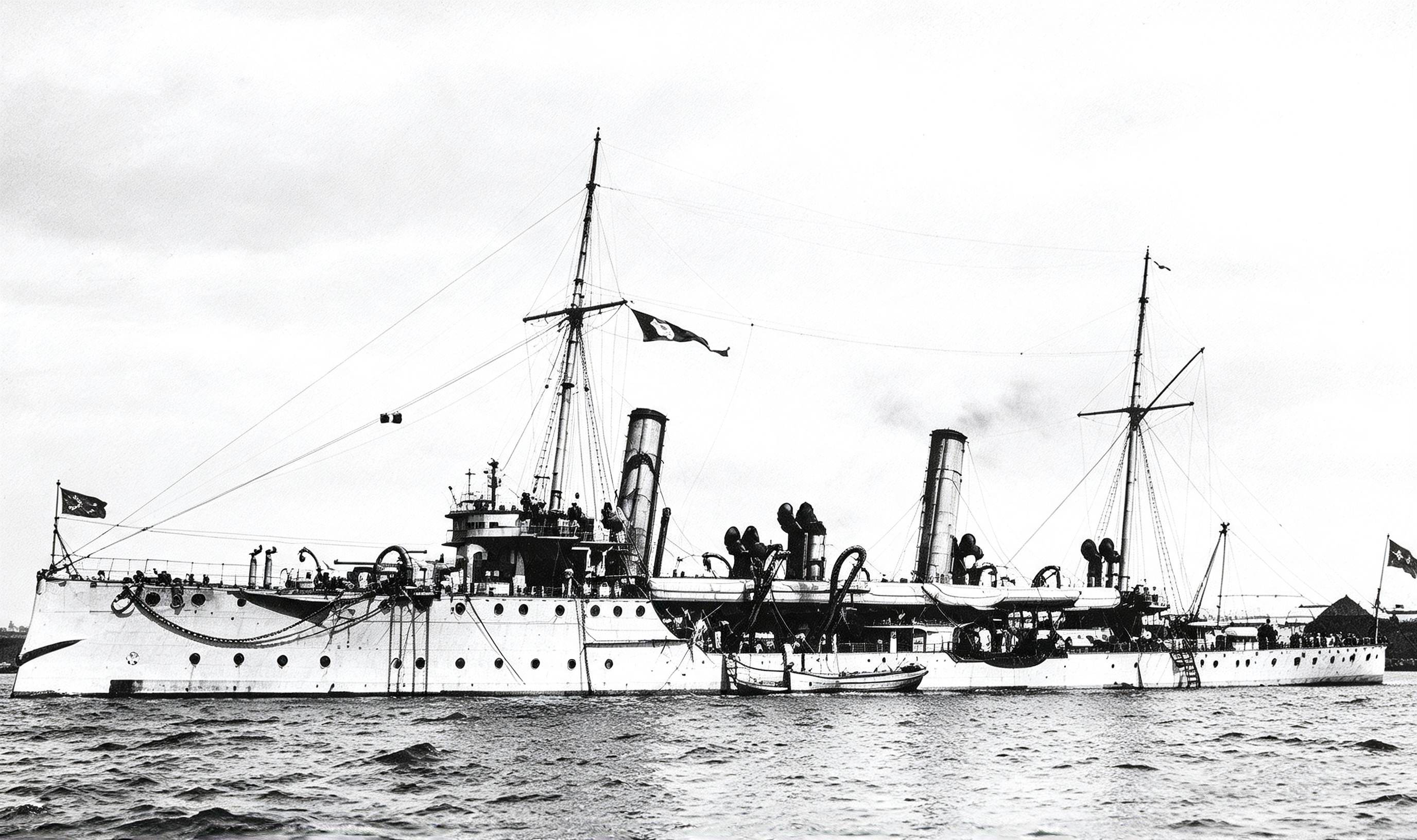
Originally built as an Alarm-class torpedo gunboat for the Royal Navy before being converted into a submarine depot ship in 1908
She served with the First Submarine Flotilla at Devonport 1914-16, then as a base ship at Torbay in 1917 and 1918.
Renamed Vulcan II in 1919
Sold August, 1924
Distribution of RN Submarines WW1
The British Fleet at the moment when war was declared possessed 72 submarine torpedo-boats built and 22 building. Some of these were, however, stationed at the oversea naval bases.
| 07-09-1892 | Launched |

|
||
| Official | ||
| Admiralty Approved | 28th Jul, 1942 | |
| Symbology | The word onyx comes from the ancient Greek word onux, which means "fingernail" or "claw". In mythology, onyx was created when Cupid used an arrowhead to clip the fingernails of the sleeping goddess Venus (Aphrodite), and the divine clippings that fell into the sacred river were turned into stone by the gods so they would never perish. |
|
| Design Notes | Upon a lozenge engrailed white, a lozenge engrailed red, charged with a like lozenge also white on a field of blue. | |
| Displacement | 810 long tons |
| Length | 242 ft (74 m) |
| Beam | 27 ft (8.2 m) |
| Draught | 8.2 ft (2.5 m) |
| Complement | 91 |
| Engines | 2 three-cylinder triple-expansion steam engines |
| Boilers | Locomotive boilers |
| Installed Power | 3,500 ihp |
| Top Speed | 18.7 knots |
| Original Armament | 2 x QF 4.7-inch (12 cm) / 45-pounder quick-firing |
| 4 x 3-pounder guns | |
| 1 x Gardner machine gun |
Pennant Numbers
Petty Officer 1st Class Albert George Hodder was one of the crew of Submarine HMS E11 who is reported to have died in an accident on 4th Feb 1915.

The atom bombs dropped on Japan at the end of the Second World War opened the door to the nuclear age. Seeing the potential for developing nuclear energy for the US Navy, Captain Hyman Rickover initiated a research programme that culminated in the launch of USS Nautilus, the world's first nuclear-powered submarine.
Meanwhile, ballistic missile technology was developing fast but was still reliant on complex liquid fuels. The US Navy partnered with the army to develop a ballistic missile for both services but withdrew when solid fuels became a practical proposition.
Under the leadership of Rear Admiral William Raborn, the US Navy set up its own project: the Polaris weapon system. In 1960, the first missile-armed nuclear-powered submarine left on patrol, with forty more to follow in subsequent years.
Two years later, when Britain's Blue Streak and Skybolt plans were cancelled, Harold Macmillan and John F Kennedy agreed for Polaris to be supplied to the Royal Navy.
At a time of intensive re-examination of the NATO alliance, the 'special relationship' between the UK and USA, and Britain's role as a nuclear power, this is the first comprehensive history of Polaris.
It brings together technical aspects, the key characters, and the full stories of the American and British programmes.
14 pages added or updated in the last Array month
Please help to maintain this site by reporting any Errors, Broken Links, Information or Site Issues on this page using this button

If you find this site useful, please consider supporting my work with a small Donation.
Please Note: Donations made using this option go directly to the site owner and not to the Submariners Association.
Thankyou for your support.
|
|
||
| Official | ||
| Admiralty Approved | 28th Jul, 1942 | |
| Symbology | The word onyx comes from the ancient Greek word onux, which means "fingernail" or "claw". In mythology, onyx was created when Cupid used an arrowhead to clip the fingernails of the sleeping goddess Venus (Aphrodite), and the divine clippings that fell into the sacred river were turned into stone by the gods so they would never perish. |
|
| Design Notes | Upon a lozenge engrailed white, a lozenge engrailed red, charged with a like lozenge also white on a field of blue. | |
| Displacement | 810 long tons |
| Length | 242 ft (74 m) |
| Beam | 27 ft (8.2 m) |
| Draught | 8.2 ft (2.5 m) |
| Complement | 91 |
| Engines | 2 three-cylinder triple-expansion steam engines |
| Boilers | Locomotive boilers |
| Installed Power | 3,500 ihp |
| Top Speed | 18.7 knots |
| Original Armament | 2 x QF 4.7-inch (12 cm) / 45-pounder quick-firing |
| 4 x 3-pounder guns | |
| 1 x Gardner machine gun |
Pennant Numbers
Petty Officer 1st Class Albert George Hodder was one of the crew of Submarine HMS E11 who is reported to have died in an accident on 4th Feb 1915.
The atom bombs dropped on Japan at the end of the Second World War opened the door to the nuclear age. Seeing the potential for developing nuclear energy for the US Navy, Captain Hyman Rickover initiated a research programme that culminated in the launch of USS Nautilus, the world's first nuclear-powered submarine.
Meanwhile, ballistic missile technology was developing fast but was still reliant on complex liquid fuels. The US Navy partnered with the army to develop a ballistic missile for both services but withdrew when solid fuels became a practical proposition.
Under the leadership of Rear Admiral William Raborn, the US Navy set up its own project: the Polaris weapon system. In 1960, the first missile-armed nuclear-powered submarine left on patrol, with forty more to follow in subsequent years.
Two years later, when Britain's Blue Streak and Skybolt plans were cancelled, Harold Macmillan and John F Kennedy agreed for Polaris to be supplied to the Royal Navy.
At a time of intensive re-examination of the NATO alliance, the 'special relationship' between the UK and USA, and Britain's role as a nuclear power, this is the first comprehensive history of Polaris.
It brings together technical aspects, the key characters, and the full stories of the American and British programmes.
14 pages added or updated in the last Array month
Please help to maintain this site by reporting any Errors, Broken Links, Information or Site Issues on this page using this button
If you find this site useful, please consider supporting my work with a small Donation.
Please Note: Donations made using this option go directly to the site owner and not to the Submariners Association.
Thankyou for your support.
This form is for you to comment on, or add additional information to this page. Any questions will be deleted. If you wish to ask a question contact the Branch or the Webmaster using the Contact Us page or ask your question on our Facebook Page