
The Type VIIC was the workhorse of the German U-boat force, with 568 commissioned from 1940 to 1945. Boats of this type were built throughout the war. The Type VIIC was an effective fighting machine and was seen almost everywhere U-boats operated, although their range was not as great as that of the larger Type IX. The VIIC came into service as the first 'Happy Time' near the beginning of World War II was almost over, and it was this boat that saw the final defeat by the Allied anti-submarine campaign in late 1943 and 1944.

Perhaps the most famous VIIC boat was U-96, featured in the movie Das Boot
For the last ten years, teams of divers have scoured waters off the North East and Yorkshire Coast looking for the last few missing German U-Boats from World War One.
U333 - How flower power beat a U-Boat in the Atlantic
In October 1942, the Battle of the Atlantic was at Its height and we were losing. Despite being far superior to anything Barrow had put in the water up to that time, German U-boats were not always successful.
U-593 was on her fifteenth patrol when she was sunk, having been in commission over two years. During the course of her long history, she claimed the sinking of 15 merchant vessels and the damaging of three others, in addition to sinking three destroyers. Most of her success was achieved in the Mediterranean which she entered on her fourth patrol in late September or early October 1942
U-889 was a type IXC U-Boat which spent some months in Canadian hands after the german surrender in 1945, before being handed over to the US Navy the following year. She was examined in minute detail and the results have survived, giving a unique account of the layout and equipment of a U-Boat
In early May of 1945, U-boats were leaving their patrol areas at sea for the last time and heading for ports around the coasts of Europe and Great Britain in compliance with the order of unconditional surrender contained in last signals from Submarine Command.
U-Boats in the Royal Navy post May 1945
The purpose of this paper is to set out the Royal Navy's policy for the acquisition of a limited number of U-Boats for research purposes, including U-1407, to explain the circumstances which led to the acquisition of this Type XVIIB U-Boat, and to describe U-1407's service in the Royal Navy from 1945 to 1949.
Further Reading |

|
| U-Boats Destroyed |

Paul Kemp Covering U-Boat losses in both World Wars, this reference for naval historians and students provides data on the nature, causes, locations, and results of losses. |
| U-Boat Manual |

Alan Gallop An insight into the design, construction and operation of the feared World War 2 German Type VIIC U-boat |
| Type VII U-boats |

Robert C. Stern After the narrow defeat of their U-boat fleet in the First World War, the German Navy analyzed their experiences and devised new theories and plans for a future conflict. |
| Hitler's Attack U-Boats |

Jak P Mallmann Showell This is the story of the Types II, VII and IX that became the workhorse' of the Kriegsmarine's submarine fleet and put out to sea to attack Allied shipping right up to the end of the war. The Type II was a small coastal boat that struggled to reach the Atlantic; the Type VII was perfectly at home there, but lacked the technology to tackle well protected convoys; whilst the Type IX was a long-range variety that was modified so that it could operate in the Indian Ocean. |
| Otto Kretschmer |

Lawrence Paterson Otto Kretschmer was only in combat from September 1939 until March 1941 but was Germany's highest-scoring U-boat commander sinking 47 ships totalling 274,333 tons. This definitive work details his personal story and the political backdrop from his earliest days. |
| U-Boat 977 |
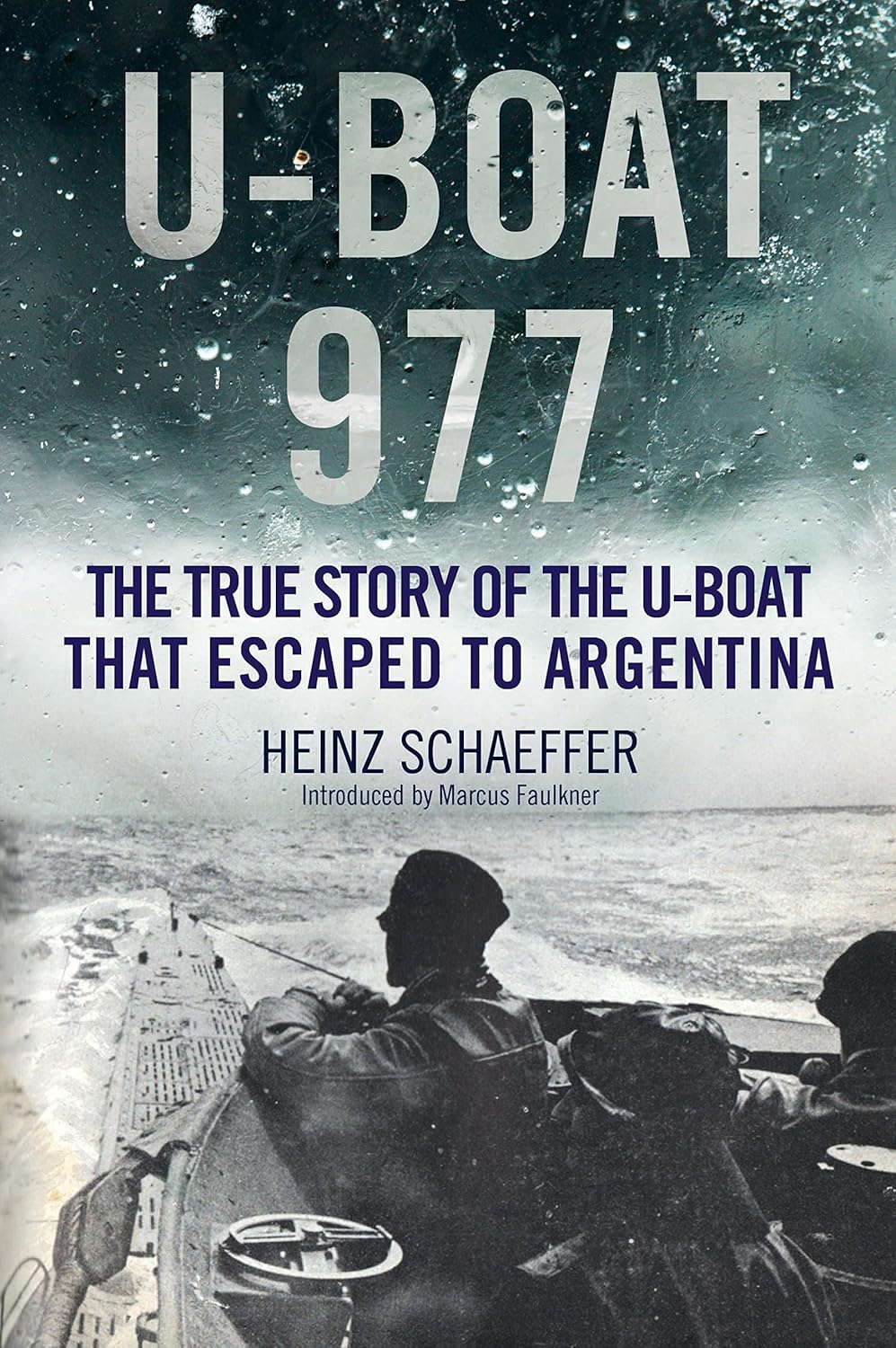
Heinz Schaeffer When it was first published in 1953, opinions were sharply divided between those who deplored the apparent extolling of a vicious form of warfare, and this who found in Heinz Schaeffer s account a revealing picture of the German Navys training and methods. |
I joined the Navy as a Seaman Boy in January 1941, leaving in April 1954. I served continuously in Terrapin, from her first commissioning in December 1943 until she was finally paid off for scrap in November 1945.

HMS Tally Ho, captained by Commander L.W.A. Bennington was a T-class submarine which achieved spectacular success in the Second World War. Her name was chosen for her by Winston Churchill and it proved a very suitable one for a hunting submarine. In a single commission, lasting from 15th March 1943 to 26th February 1945, she operated in the Malacca Strait.
Here, surrounded by enemy air bases and in badly charted shallow waters, so shallow that many experts considered them unsuitable for submarine operations, she took a heavy toll of enemy warships and supply vessels. The boat, her captain and her crew are all vividly portrayed in this exciting chronicle which is the fruit of wide and detailed research.
20 pages added or updated in the last Array month
Please help to maintain this site by reporting any Errors, Broken Links, Information or Site Issues on this page using this button

If you find this site useful, please consider supporting my work with a small Donation.
Please Note: Donations made using this option go directly to the site owner and not to the Submariners Association.
Thankyou for your support.
For the last ten years, teams of divers have scoured waters off the North East and Yorkshire Coast looking for the last few missing German U-Boats from World War One.
U333 - How flower power beat a U-Boat in the Atlantic
In October 1942, the Battle of the Atlantic was at Its height and we were losing. Despite being far superior to anything Barrow had put in the water up to that time, German U-boats were not always successful.
U-593 was on her fifteenth patrol when she was sunk, having been in commission over two years. During the course of her long history, she claimed the sinking of 15 merchant vessels and the damaging of three others, in addition to sinking three destroyers. Most of her success was achieved in the Mediterranean which she entered on her fourth patrol in late September or early October 1942
U-889 was a type IXC U-Boat which spent some months in Canadian hands after the german surrender in 1945, before being handed over to the US Navy the following year. She was examined in minute detail and the results have survived, giving a unique account of the layout and equipment of a U-Boat
In early May of 1945, U-boats were leaving their patrol areas at sea for the last time and heading for ports around the coasts of Europe and Great Britain in compliance with the order of unconditional surrender contained in last signals from Submarine Command.
U-Boats in the Royal Navy post May 1945
The purpose of this paper is to set out the Royal Navy's policy for the acquisition of a limited number of U-Boats for research purposes, including U-1407, to explain the circumstances which led to the acquisition of this Type XVIIB U-Boat, and to describe U-1407's service in the Royal Navy from 1945 to 1949.
Further Reading |
|
| U-Boats Destroyed |
|
Paul Kemp Covering U-Boat losses in both World Wars, this reference for naval historians and students provides data on the nature, causes, locations, and results of losses. |
| U-Boat Manual |
|
Alan Gallop An insight into the design, construction and operation of the feared World War 2 German Type VIIC U-boat |
| Type VII U-boats |
|
Robert C. Stern After the narrow defeat of their U-boat fleet in the First World War, the German Navy analyzed their experiences and devised new theories and plans for a future conflict. |
| Hitler's Attack U-Boats |
|
Jak P Mallmann Showell This is the story of the Types II, VII and IX that became the workhorse' of the Kriegsmarine's submarine fleet and put out to sea to attack Allied shipping right up to the end of the war. The Type II was a small coastal boat that struggled to reach the Atlantic; the Type VII was perfectly at home there, but lacked the technology to tackle well protected convoys; whilst the Type IX was a long-range variety that was modified so that it could operate in the Indian Ocean. |
| Otto Kretschmer |
|
Lawrence Paterson Otto Kretschmer was only in combat from September 1939 until March 1941 but was Germany's highest-scoring U-boat commander sinking 47 ships totalling 274,333 tons. This definitive work details his personal story and the political backdrop from his earliest days. |
| U-Boat 977 |
|
Heinz Schaeffer When it was first published in 1953, opinions were sharply divided between those who deplored the apparent extolling of a vicious form of warfare, and this who found in Heinz Schaeffer s account a revealing picture of the German Navys training and methods. |
I joined the Navy as a Seaman Boy in January 1941, leaving in April 1954. I served continuously in Terrapin, from her first commissioning in December 1943 until she was finally paid off for scrap in November 1945.
HMS Tally Ho, captained by Commander L.W.A. Bennington was a T-class submarine which achieved spectacular success in the Second World War. Her name was chosen for her by Winston Churchill and it proved a very suitable one for a hunting submarine. In a single commission, lasting from 15th March 1943 to 26th February 1945, she operated in the Malacca Strait.
Here, surrounded by enemy air bases and in badly charted shallow waters, so shallow that many experts considered them unsuitable for submarine operations, she took a heavy toll of enemy warships and supply vessels. The boat, her captain and her crew are all vividly portrayed in this exciting chronicle which is the fruit of wide and detailed research.
20 pages added or updated in the last Array month
Please help to maintain this site by reporting any Errors, Broken Links, Information or Site Issues on this page using this button
If you find this site useful, please consider supporting my work with a small Donation.
Please Note: Donations made using this option go directly to the site owner and not to the Submariners Association.
Thankyou for your support.
This form is for you to comment on, or add additional information to this page. Any questions will be deleted. If you wish to ask a question contact the Branch or the Webmaster using the Contact Us page or ask your question on our Facebook Page