
E14 was employed in the Dardanelle's theatre of war. Her distinction is that she had two commanding officers, each of whom won the Victoria Cross in the same area but three years apart.
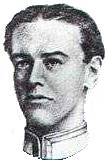
On April 27, 1915 Lieutenant Commander E C Boyle took E14 into the Sea of Marmora and was then only the second British submarine commander to have done so during the campaign.
He patrolled for 22 days harassing Turkish shipping and forcing Turkish reinforcements for Gallipoli to take a long and tiring overland journey thus helping the Allied forces there.
Boyle sank a heavily laden troop transport and it is on record that he claimed and received £30,000 "blood money." One can estimate that as being worth about £150,000, possibly more in today's currency.
It was tremendously difficult operating in the Sea of Marmora. Never more than 40 miles wide and less than 100 miles in length, the Sea could be entered only via the Dardanelle's passage.
That meant that a marauding submarine was on her own, cut off from all help. Her position once revealed, was, as E14 found, constantly reported. Continual changes of operational area had to be made. The skipper could never relax, nor could his crew.
The air was frequently foul and Boyle's boat was running short of drinking water by the time the patrol was ending. In all he completed 70 days in the Sea in three patrols and on his way back from the third his luck ran out.
He hit the Turkish anti-submarine nets fair and square and maybe more by good luck than good judgement managed to scrape through with the hull heavily cut and scraped by the wires. E14 was surely "the one that got away."
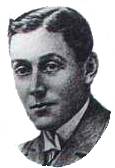
E14's last commanding officer was Lieutenant G S White. He won his VC posthumously for in a gallant and desperate effort to torpedo the German battleship Goeben, mined and aground off Nagara Point one of his torpedoes exploded prematurely and damaged his own command.
The severe damage forced him to surface E14. He steered a course for shore and the enemy guns now concentrating on his boat.
This gave his crew a chance to escape but White himself was killed by shell fire shortly before E14 sank. That was in 1918
Lieutenant Edward Courtney Boyle
For most conspicuous bravery, in command of Submarine E14, when he dived his vessel under enemy minefields and entered the Sea of Marmara on the 27th April, 1915.
Lieutenant Commander Geoffrey Saxon White
Following a failed attack the German Battle Cruiser Goeben, E14 was attacked and badly damaged. Lieutenant-Commander White decided to run the risk of proceeding on the surface, after running the gauntlet for half-an-hour, being steered from below, E14 was so badly damaged that Lieutenant-Commander White turned towards the shore in order to give the crew a chance of being saved. He remained on deck the whole time himself until he was killed by a shell.
Prize Bounty or Head Money was a grant from the Crown out of moneys provided by Parliament as a reward for the sinking or capture of an armed vessel belonging to enemy forces, and intended primarily as an encouragement of personal gallantry and enterprise.
Further Reading |

|
| Unheard, Unseen |

David Boyle New Year 1915. The world is locked in a terrible conflict, and Winston Churchill has conceived of a bold plan. Constantinople would be seized and Turkey knocked out of the war. The key is the Dardanelles. |
Alan joined HMS Explorer in 'refit' at Barrow in Furness shortly before the Submarine moved from the Graving Dock to a berth at the in the Dock System at the Admiralty Development Establishment, Barrow (ADEB). The 'refit' completed in August 1959 after a slight delay owing to a fire in the Turbine Room - caused by a VSEL Coppersmith working with a blow lamp in a cramped bilge space. Alan's comment 'Nasty.'

The part played in the Cold War by the Royal Navy's submarines still retains a great degree of mystery and, in the traditions of the 'Silent Service,' remains largely shrouded in secrecy. Cold War Command brings us as close as is possible to the realities of commanding nuclear hunter-killer submarines, routinely tasked to hunt out and covertly follow Soviet submarines in order to destroy them should there be any outbreak of hostilities.
Dan Conley takes the reader through his early career in diesel submarines, prior to his transition to the complex and very demanding three-dimensional world of operating nuclear submarines; he describes the Royal Navy's shortcomings in ship and weapons procurement and delivers many insights into the procurement failures which led to the effective bankrupting of the Defence budget in the first decade of the 21st century. In command of the hunter killer submarines Courageous and Valiant in the 1980s, he achieved exceptional success against Soviet submarines at the height of the Cold War. He was also involved in the initial deployment of the Trident nuclear weapon system, and divulges hitherto un-revealed facets of nuclear weapons strategy and policy during this period.
This gripping read takes you onboard a nuclear submarine and into the depths of the ocean, and relays the excitement and apprehensions experienced by British submariners confronted by a massive Soviet Navy.
12 pages added or updated in the last Array month
Please help to maintain this site by reporting any Errors, Broken Links, Information or Site Issues on this page using this button

If you find this site useful, please consider supporting my work with a small Donation.
Please Note: Donations made using this option go directly to the site owner and not to the Submariners Association.
Thankyou for your support.
Lieutenant Edward Courtney Boyle
For most conspicuous bravery, in command of Submarine E14, when he dived his vessel under enemy minefields and entered the Sea of Marmara on the 27th April, 1915.
Lieutenant Commander Geoffrey Saxon White
Following a failed attack the German Battle Cruiser Goeben, E14 was attacked and badly damaged. Lieutenant-Commander White decided to run the risk of proceeding on the surface, after running the gauntlet for half-an-hour, being steered from below, E14 was so badly damaged that Lieutenant-Commander White turned towards the shore in order to give the crew a chance of being saved. He remained on deck the whole time himself until he was killed by a shell.
Prize Bounty or Head Money was a grant from the Crown out of moneys provided by Parliament as a reward for the sinking or capture of an armed vessel belonging to enemy forces, and intended primarily as an encouragement of personal gallantry and enterprise.
Further Reading |
|
| Unheard, Unseen |
|
David Boyle New Year 1915. The world is locked in a terrible conflict, and Winston Churchill has conceived of a bold plan. Constantinople would be seized and Turkey knocked out of the war. The key is the Dardanelles. |
Alan joined HMS Explorer in 'refit' at Barrow in Furness shortly before the Submarine moved from the Graving Dock to a berth at the in the Dock System at the Admiralty Development Establishment, Barrow (ADEB). The 'refit' completed in August 1959 after a slight delay owing to a fire in the Turbine Room - caused by a VSEL Coppersmith working with a blow lamp in a cramped bilge space. Alan's comment 'Nasty.'
The part played in the Cold War by the Royal Navy's submarines still retains a great degree of mystery and, in the traditions of the 'Silent Service,' remains largely shrouded in secrecy. Cold War Command brings us as close as is possible to the realities of commanding nuclear hunter-killer submarines, routinely tasked to hunt out and covertly follow Soviet submarines in order to destroy them should there be any outbreak of hostilities.
Dan Conley takes the reader through his early career in diesel submarines, prior to his transition to the complex and very demanding three-dimensional world of operating nuclear submarines; he describes the Royal Navy's shortcomings in ship and weapons procurement and delivers many insights into the procurement failures which led to the effective bankrupting of the Defence budget in the first decade of the 21st century. In command of the hunter killer submarines Courageous and Valiant in the 1980s, he achieved exceptional success against Soviet submarines at the height of the Cold War. He was also involved in the initial deployment of the Trident nuclear weapon system, and divulges hitherto un-revealed facets of nuclear weapons strategy and policy during this period.
This gripping read takes you onboard a nuclear submarine and into the depths of the ocean, and relays the excitement and apprehensions experienced by British submariners confronted by a massive Soviet Navy.
12 pages added or updated in the last Array month
Please help to maintain this site by reporting any Errors, Broken Links, Information or Site Issues on this page using this button
If you find this site useful, please consider supporting my work with a small Donation.
Please Note: Donations made using this option go directly to the site owner and not to the Submariners Association.
Thankyou for your support.
This form is for you to comment on, or add additional information to this page. Any questions will be deleted. If you wish to ask a question contact the Branch or the Webmaster using the Contact Us page or ask your question on our Facebook Page