

Built as a coastal submarine based on the doubled hulled V class with a few minor improvements. The main improvement being the addition of a stern torpedo tube. Only three were built out of the ten ordered.
After trials F1 was given larger hydroplanes and substantial plane guards
F1 and F3 were fitted with Vickers diesels, whilst F2 was fitted with MAN diesels built under licence by Whites. These boats saw little in the way of war service apart from some local defence work and were quickly disposed of.
Five further boats F4 to F8 were cancelled after the outbreak of war.
Primarily used for coastal defence. All three of the class survived the war and ended their service as training boats at Campbeltown.
Chapter 5 - Double-Hull Submarines
The Development of HM Submarines from Holland 1 (1901) to Porpoise (1930)
Chapter 6: Double-Hull Coastal Types - S, V, W and F Classes
The Development of HM Submarines from Holland 1 (1901) to Porpoise (1930)
Further Reading |

|
| Harwich Submarines in the Great War |

Mark Harris / Rear Admiral Jonathan Westbrook CBE The authoritative story of the Royal Navy's first submarine campaign, told using new research. The Harwich Submarine Flotilla played a key role establishing British dominance in the North Sea at the beginning of the First World War. Letters, diaries, memoirs and combat reports of the participants are used to give a complete account. |
My father was in the Navy during the Second World War and when he was on his way back, I can remember standing with my mother at the gate, asking,
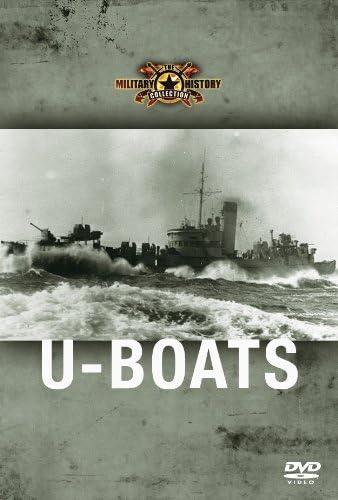
Hell-bent on starving the British into surrender, Hitlers U-Boats prowled the Atlantic in packs like hungry wolves sending ships, supplies and thousands of men to a watery grave. Stealthy and undetected, the German submarines of WW2 were unparalleled in the ability of sneak attack.
Their goal was to destroy merchant shipping bound for the British Isles with essential supplies, and bring the country to the brink of starvation and total collapse allowing an easy Nazi invasion.
This new DVD release contains spectacular footage of operation U-Boats, detailed graphics and additional featurs including a gallery of U-Boat types, and in-depth Tech Specs.
12 pages added or updated in the last Array month
Please help to maintain this site by reporting any Errors, Broken Links, Information or Site Issues on this page using this button

If you find this site useful, please consider supporting my work with a small Donation.
Please Note: Donations made using this option go directly to the site owner and not to the Submariners Association.
Thankyou for your support.
Chapter 5 - Double-Hull Submarines
The Development of HM Submarines from Holland 1 (1901) to Porpoise (1930)
Chapter 6: Double-Hull Coastal Types - S, V, W and F Classes
The Development of HM Submarines from Holland 1 (1901) to Porpoise (1930)
Further Reading |
|
| Harwich Submarines in the Great War |
|
Mark Harris / Rear Admiral Jonathan Westbrook CBE The authoritative story of the Royal Navy's first submarine campaign, told using new research. The Harwich Submarine Flotilla played a key role establishing British dominance in the North Sea at the beginning of the First World War. Letters, diaries, memoirs and combat reports of the participants are used to give a complete account. |
My father was in the Navy during the Second World War and when he was on his way back, I can remember standing with my mother at the gate, asking,
Hell-bent on starving the British into surrender, Hitlers U-Boats prowled the Atlantic in packs like hungry wolves sending ships, supplies and thousands of men to a watery grave. Stealthy and undetected, the German submarines of WW2 were unparalleled in the ability of sneak attack.
Their goal was to destroy merchant shipping bound for the British Isles with essential supplies, and bring the country to the brink of starvation and total collapse allowing an easy Nazi invasion.
This new DVD release contains spectacular footage of operation U-Boats, detailed graphics and additional featurs including a gallery of U-Boat types, and in-depth Tech Specs.
12 pages added or updated in the last Array month
Please help to maintain this site by reporting any Errors, Broken Links, Information or Site Issues on this page using this button
If you find this site useful, please consider supporting my work with a small Donation.
Please Note: Donations made using this option go directly to the site owner and not to the Submariners Association.
Thankyou for your support.