| Built By: | Vickers (Tyne) |
| Build Group: | V2 |
| Fate: | Scrapped in April 1961 at Pasajes. |
| 1944: | Lieutenant | Stephen John Fovargue | MID |
| 1945: | Lieutenant | Francis Ellis Ashmead-Bartlett |
Virulent was lent to the Hellenic Navy as Argonaftis (Y15) from 29 May 1946 until 3 October 1958.
She was meant to be towed from Malta to the River Tyne but she broke adrift from the tow on 15 December 1958 and became stranded on the northern Spanish coast. She was then found and towed by two Spanish trawlers on 6 January 1959. Sold to a Spanish scrap company in spring 1961 and was eventually scrapped in April 1961 at Pasajes.

|
||
| Official | ||
| Admiralty Approved | 6th Mar, 1945 | |
| Symbology | Poisonous or venomous. Certain North American Indian tribes call the rattlesnake 'The Prince of Snakes' | |
| Design Notes | A serpent coiled to strike, crowned with an antique crown, all proper on a blue field. | |
| Length overall | 195 ft 6 inch |
| Beam | 15 ft 9 inch |
| Depth | 15 ft 10 inch |
| Displacement | 648 tons (surface) |
| 735 tons (submerged) | |
| Diving Depth | 200 ft |
| Speed | 11.5 knots (surface) |
| 9 knots (submerged) | |
| No. of shafts | 2 |
| Endurance | Surface: 4050 miles at 10 knots (design) |
| Submerged: 23 miles at 8 knots or 170 miles at 2.5 knots (design) | |
| Armament | 4 x 21 inch bow tubes |
| (8 torpedoes carried) | |
| 1 x 3 inch gun | |
| 3 x 0.303 inch machine-guns | |
| Complement | 4 Officers and 33 Ratings |
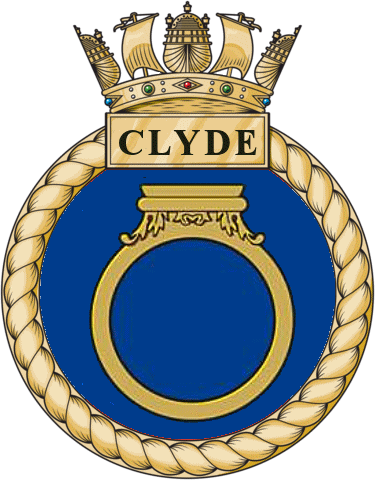
| Class: | 1929 - 1945: River Class |
| Built By: | Vickers (Barrow) |
| Build Group: | River 2 |
| Fate: | |
| Sold on 30th July 1946 and scrapped at Durban. | |

When American submarine Swordfish is torpedoed the survivors are picked up by a passing German U-boat but an outbreak of meningitis threatens all aboard.
14 pages added or updated in the last 1 month
Please help to maintain this site by reporting any Errors, Broken Links, Information or Site Issues on this page using this button

If you find this site useful, please consider supporting my work with a small Donation.
Please Note: Donations made using this option go directly to the site owner and not to the Submariners Association.
Thankyou for your support.
|
|
||
| Official | ||
| Admiralty Approved | 6th Mar, 1945 | |
| Symbology | Poisonous or venomous. Certain North American Indian tribes call the rattlesnake 'The Prince of Snakes' | |
| Design Notes | A serpent coiled to strike, crowned with an antique crown, all proper on a blue field. | |
| Length overall | 195 ft 6 inch |
| Beam | 15 ft 9 inch |
| Depth | 15 ft 10 inch |
| Displacement | 648 tons (surface) |
| 735 tons (submerged) | |
| Diving Depth | 200 ft |
| Speed | 11.5 knots (surface) |
| 9 knots (submerged) | |
| No. of shafts | 2 |
| Endurance | Surface: 4050 miles at 10 knots (design) |
| Submerged: 23 miles at 8 knots or 170 miles at 2.5 knots (design) | |
| Armament | 4 x 21 inch bow tubes |
| (8 torpedoes carried) | |
| 1 x 3 inch gun | |
| 3 x 0.303 inch machine-guns | |
| Complement | 4 Officers and 33 Ratings |
| Class: | 1929 - 1945: River Class |
| Built By: | Vickers (Barrow) |
| Build Group: | River 2 |
| Fate: | |
| Sold on 30th July 1946 and scrapped at Durban. | |
When American submarine Swordfish is torpedoed the survivors are picked up by a passing German U-boat but an outbreak of meningitis threatens all aboard.
14 pages added or updated in the last 1 month
Please help to maintain this site by reporting any Errors, Broken Links, Information or Site Issues on this page using this button
If you find this site useful, please consider supporting my work with a small Donation.
Please Note: Donations made using this option go directly to the site owner and not to the Submariners Association.
Thankyou for your support.
This form is for you to comment on, or add additional information to this page. Any questions will be deleted. If you wish to ask a question contact the Branch or the Webmaster using the Contact Us page or ask your question on our Facebook Page