
| Built By: | Vickers (Barrow) |
| Build Group: | SSBN1 |
| Fate: | Laid up at Rosyth |


| 1971: | Captain | Gerald Allan Sotheran Paul |
Keel Laying
Launched by HM Queen Elizabeth the Queen Mother
| 08-05-1963 | Ordered from Vickers, barrow |
| 26-02-1964 | Laid Down |
| 15-09-1966 | Launched |
| 03-10-1967 | Completed |
| 15-02-1968 | The first test-firing of a Polaris missile from a Royal Navy submarine was successfully conducted |
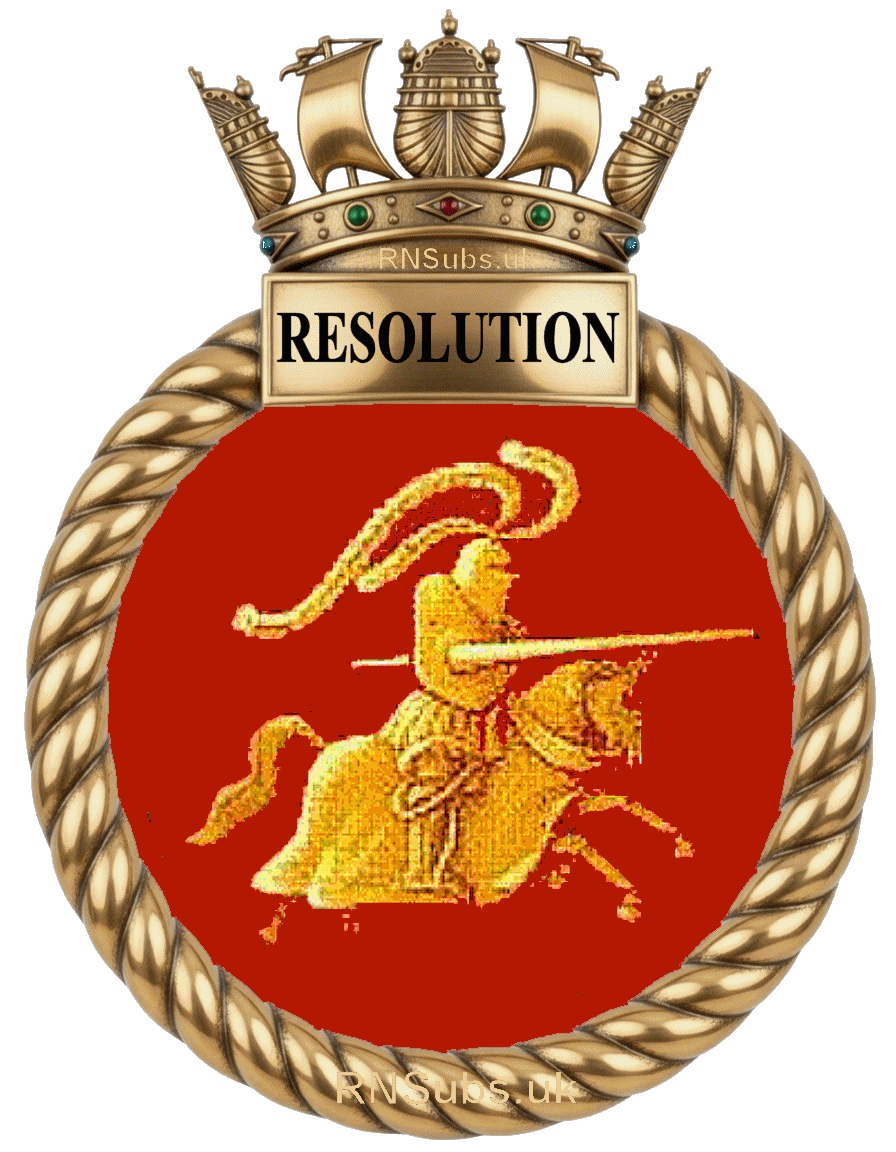
| Length overall | 425 ft |
| Beam | 33 ft |
| Displacement | 7500 tons (surface) |
| 8400 tons (submerged) | |
| Diving Depth | In excess of 1000 ft |
| Speed | 20 knots (surface) / 25 knots (submerged) |
| 25 knots (submerged) | |
| No. of shafts | 1 |
| Armament | 6 x 21 inch bow tubes |
| 16 x Polaris A-3 tubes | |
| Complement | 143 (two crews) |

| Class: | 1936 - 1958: U Class |
| Built By: | Vickers (Barrow) |
| Build Group: | U1 |
| Fate: | |
| Mistaken for a U boat in the Bay of Biscay and bombed by the RAF on 11 Nov 1942 | |

A first hand account of the German U-boat battles of World War II, by one of the very few surviving commanders.
This is a story of triumph, disaster and eventual survival against all odds. Herbert Werner was one of the few U-boat commanders whose skill, daring and incredible luck saw him safely through to the end of the war. His is an epic and chilling description of the fearful havoc wrought by one small U-boat on the Atlantic convoys.
But easy success ebbed away in the face of ever-improving Allied detection and attack techniques. The hunters became the prey, to suffer appalling losses. Of 842 U-boats launched 779 were sunk, 'iron-coffins' to 28,000 men.
Herbert Werner's graphic account of war waged from beneath the sea, of horror and cold, cruel death, is dedicated to the seamen of all nations who died in the Battle of the Atlantic.
20 pages added or updated in the last 15 month
Please help to maintain this site by reporting any Errors, Broken Links, Information or Site Issues on this page using this button

If you find this site useful, please consider supporting my work with a small Donation.
Please Note: Donations made using this option go directly to the site owner and not to the Submariners Association.
Thankyou for your support.
| Length overall | 425 ft |
| Beam | 33 ft |
| Displacement | 7500 tons (surface) |
| 8400 tons (submerged) | |
| Diving Depth | In excess of 1000 ft |
| Speed | 20 knots (surface) / 25 knots (submerged) |
| 25 knots (submerged) | |
| No. of shafts | 1 |
| Armament | 6 x 21 inch bow tubes |
| 16 x Polaris A-3 tubes | |
| Complement | 143 (two crews) |
| Class: | 1936 - 1958: U Class |
| Built By: | Vickers (Barrow) |
| Build Group: | U1 |
| Fate: | |
| Mistaken for a U boat in the Bay of Biscay and bombed by the RAF on 11 Nov 1942 | |
A first hand account of the German U-boat battles of World War II, by one of the very few surviving commanders.
This is a story of triumph, disaster and eventual survival against all odds. Herbert Werner was one of the few U-boat commanders whose skill, daring and incredible luck saw him safely through to the end of the war. His is an epic and chilling description of the fearful havoc wrought by one small U-boat on the Atlantic convoys.
But easy success ebbed away in the face of ever-improving Allied detection and attack techniques. The hunters became the prey, to suffer appalling losses. Of 842 U-boats launched 779 were sunk, 'iron-coffins' to 28,000 men.
Herbert Werner's graphic account of war waged from beneath the sea, of horror and cold, cruel death, is dedicated to the seamen of all nations who died in the Battle of the Atlantic.
20 pages added or updated in the last 15 month
Please help to maintain this site by reporting any Errors, Broken Links, Information or Site Issues on this page using this button
If you find this site useful, please consider supporting my work with a small Donation.
Please Note: Donations made using this option go directly to the site owner and not to the Submariners Association.
Thankyou for your support.
This form is for you to comment on, or add additional information to this page. Any questions will be deleted. If you wish to ask a question contact the Branch or the Webmaster using the Contact Us page or ask your question on our Facebook Page